1 / 4
Cattle Bleeding Elevator
Professional Cattle Bleeding Elevator | Safe Carcass Transport manufacturing.
Category
Need help?
Our team can help with product information, technical specifications and quotations.
Product Description
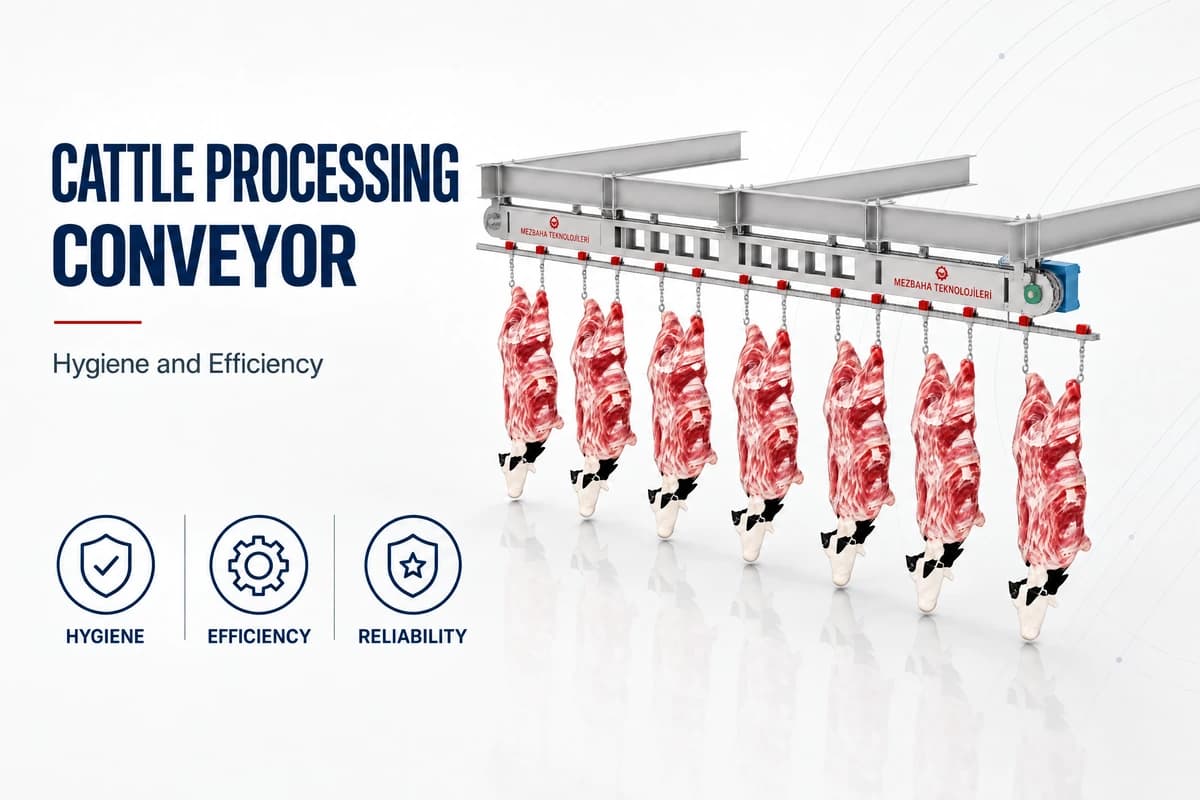
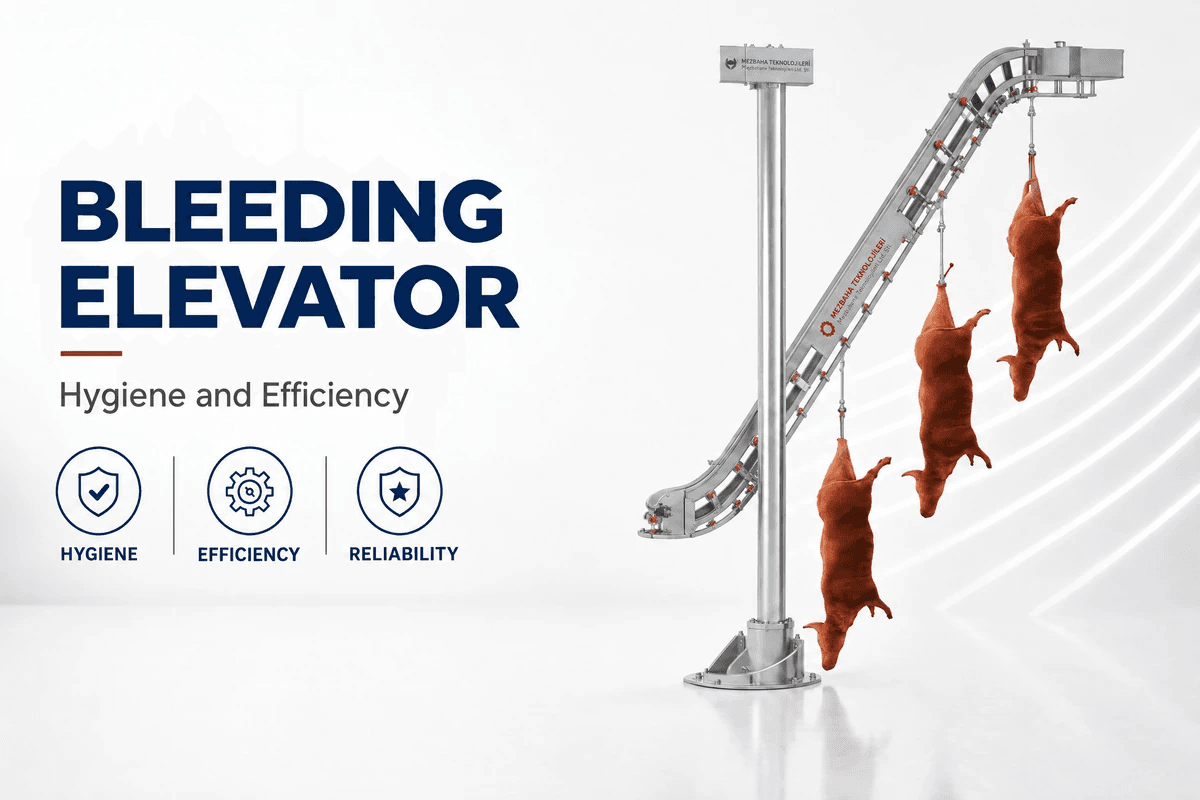
The Cattle Bleeding Elevator is an elevator solution used in place of a bleeding crane to support controlled carcass transfer to the bleeding line. By attaching the hook and animal to the next pusher in sequence, it helps sustain the process flow and reduces the need to wait for the hook to return along the rail.
The product is recommended for facilities processing 250 head or more per day. It helps establish an orderly conveying flow on the slaughter line and supports safer handling of the lifting process.
The elevator can be manufactured with a stainless-steel twin-rail or monorail configuration. Pusher lugs arranged at approximately 600 mm intervals on the chain are designed to raise quarter carcasses to approximately 4,500 mm at an incline of approximately 45°. The stated initial height is 1 m.
The drive system uses a 7.5 hp worm-gear motor reducer and provides an approximate travelling speed of 22 m/min. A hot-dip galvanized chassis and electro-galvanized gears and chains are specified.
Applications
Application: Conveying carcasses to the bleeding line
Recommended facility capacity: 250 head or more per day
Rail configuration: Stainless-steel twin rail or monorail
Carcass configuration: Quarter carcass
Pusher-lug spacing: Approximately 600 mm
Lifting incline: Approximately 45°
Lifting level: Approximately 4,500 mm
Initial height: 1 m
Motor power: 7.5 hp
Drive system: Worm-gear motor reducer
Travelling speed: Approximately 22 m/min
Chassis finish: Hot-dip galvanized
Gear and chain finish: Electro-galvanized
Chain arrangement: Chain system with drive and tensioning sprockets
Bearing arrangement: Sprockets mounted to the chassis with bearings
Key Features
Continuous line flow: Attaching the hook and carcass to the next pusher supports the production flow on the bleeding line.
•
Safer conveying approach: Used in place of a bleeding crane, the elevator provides an approach intended to reduce drop risks during lifting.
•
Suitability for high-capacity facilities: Recommended for operations processing 250 head or more per day.
•
Durable construction: A galvanized chassis with electro-galvanized gears and chains is specified for slaughterhouse use.