


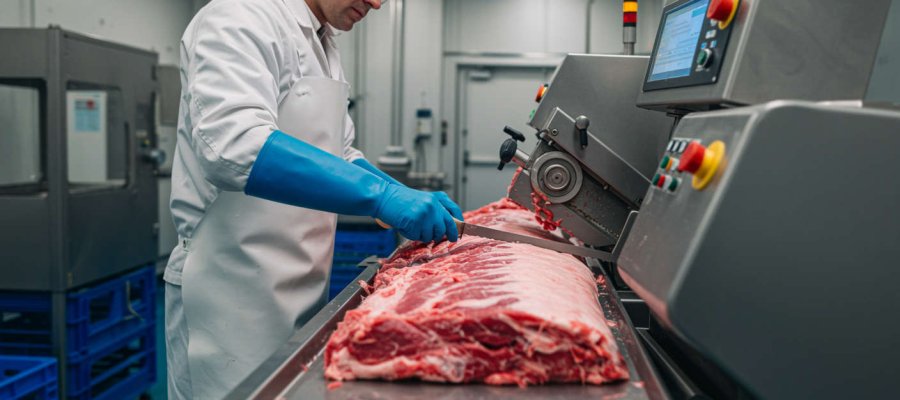
Meat Cutting Saws for Fast and Safe Processing
Meat cutting saw and bone cutting saw solutions for faster, safer processing with reliable slaughterhouse cutting equipment performance.

25 March, 07:03
In a busy plant, speed is valuable when it stays under control. A well-built meat cutting saw helps teams portion product with a steady rhythm, cleaner lines, and less unnecessary handling. That matters for output, though it also matters for comfort on the floor. When operators do not have to fight the machine, the whole line feels calmer and more predictable.
Good saw performance usually comes down to a few practical things: stable blade movement, clean table support, reliable guarding, and a frame that stands up well to daily washdown. Guidance on machine guarding and sanitary design points to adjustable guards, enclosed moving parts, and easy-to-clean construction as real priorities in food processing environments.
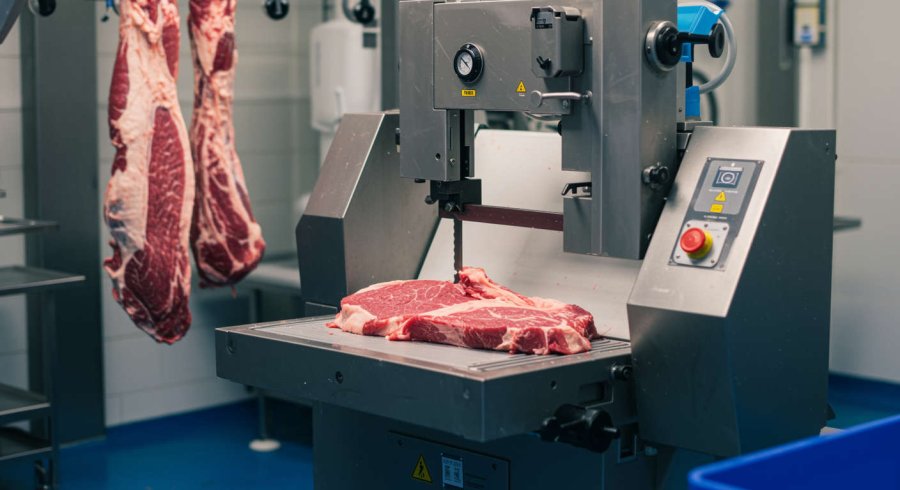
How A Bone Cutting Saw Supports Cleaner Portioning
A bone cutting saw is often chosen for one simple reason: it gives processors a more consistent way to move through dense product without forcing rough manual cuts. When the blade is sharp, tension is correct, and feed feels stable, operators can work with more confidence and fewer stops. That improves cut quality and reduces the kind of hesitation that slows production during peak hours.
Safety guidance for band saws highlights proper blade tension indicators, guarding around the point of operation, and protection around pulley mechanisms because those details make day-to-day use safer and more manageable. In real buying decisions, the most useful machine is usually the one that feels dependable every shift, not the one that simply looks powerful on paper.
What To Look For In Daily Operation
A machine may look impressive on delivery day, but daily use tells the real story. A meat cutting saw earns its place when it starts smoothly, tracks accurately, and stays easy to clean after a long shift. In meat rooms, equipment design has a direct connection to sanitation because surfaces, joints, and access points shape how quickly crews can remove residue and prepare for the next run. Guidance on sanitary design for meat and poultry equipment emphasizes corrosion-resistant materials, accessible construction, and features that support effective cleaning and inspection. That is why stainless contact surfaces, fewer dirt traps, and easy access to service points matter just as much as motor strength. When these details come together, the saw fits into the workday instead of creating extra work around it.
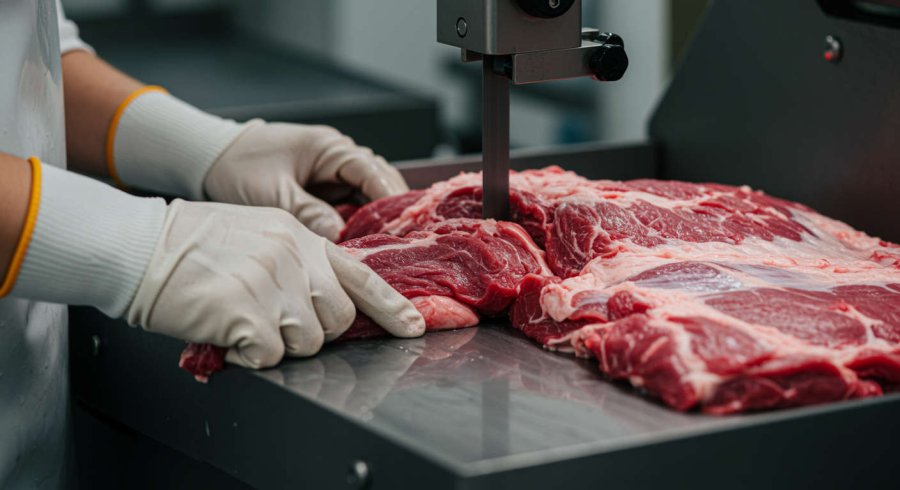
Key Features That Make Processing Easier
When buyers compare models, a short checklist usually makes the decision clearer:
-
self-adjusting blade guard for the exposed cutting area
-
enclosed pulley section and protected moving parts
-
blade tension control that is easy to monitor
-
corrosion-resistant body built for repeated cleaning
-
smooth surfaces and fewer hidden gaps
-
emergency stop access that feels natural during fast work
A bone cutting saw with a stable guide and clear guarding helps the operator stay focused on the product rather than compensating for the machine. For many facilities, this is what separates good slaughterhouse cutting equipment from equipment that only performs well in short demonstrations. The same design logic also supports sanitation, since hygienic construction reduces product buildup and shortens cleaning time.
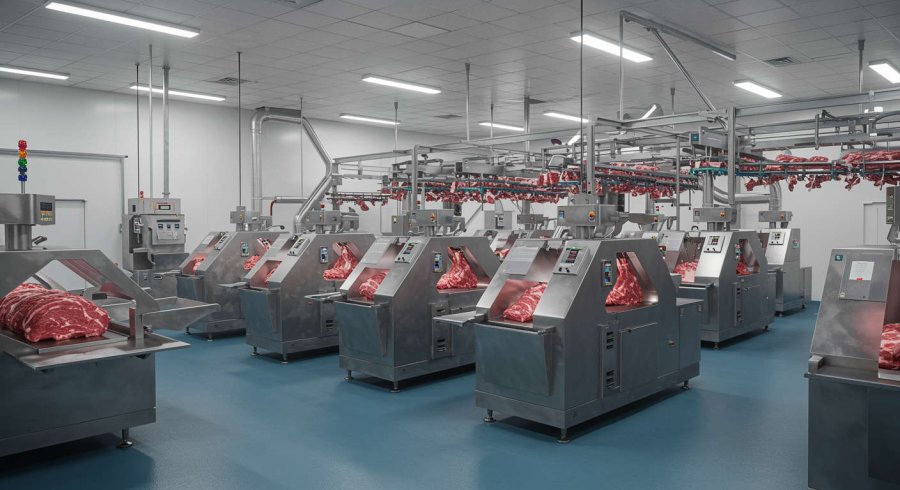
How Hygiene Design Protects Product Quality
Clean design is not a side detail in meat processing. It plays a direct role in product quality, shift turnover, and maintenance planning. Equipment guidance for the sector consistently connects sanitary design with smoother cleaning, lower contamination risk, and better control of residues on product-contact surfaces. For processors, that translates into less downtime and a more reliable routine between batches. A meat cutting saw with smooth welds, open access for washdown, and durable stainless construction is easier to keep in good condition over time. That gives sanitation teams a fairer workload and makes pre-operation checks more straightforward. In practical terms, better hygiene design often saves time in places that operators feel every day, even if customers never see those moments.
Why The Right Saw Adds Long-Term Value
The best equipment choice is rarely about chasing the highest specification. It is about matching the saw to the pace, layout, and cleaning routine of the plant. A reliable bone cutting saw reduces interruptions, supports more consistent cuts, and gives staff a steadier way to work through demanding shifts. The same goes for slaughterhouse cutting equipment across the wider line. Machines that are simple to clean, comfortable to operate, and built with practical safeguards tend to create better long-term value than complicated systems that add friction.
A dependable meat cutting saw does more than cut quickly. It helps create a workplace that feels more controlled, more efficient, and easier to trust day after day.