Hygiene, Capacity and Traceability Management in Carcass Hanging Lines
Spacing plans, cleaning access, product identity and cold chain connection in hanging carcass storage and transfer layouts.
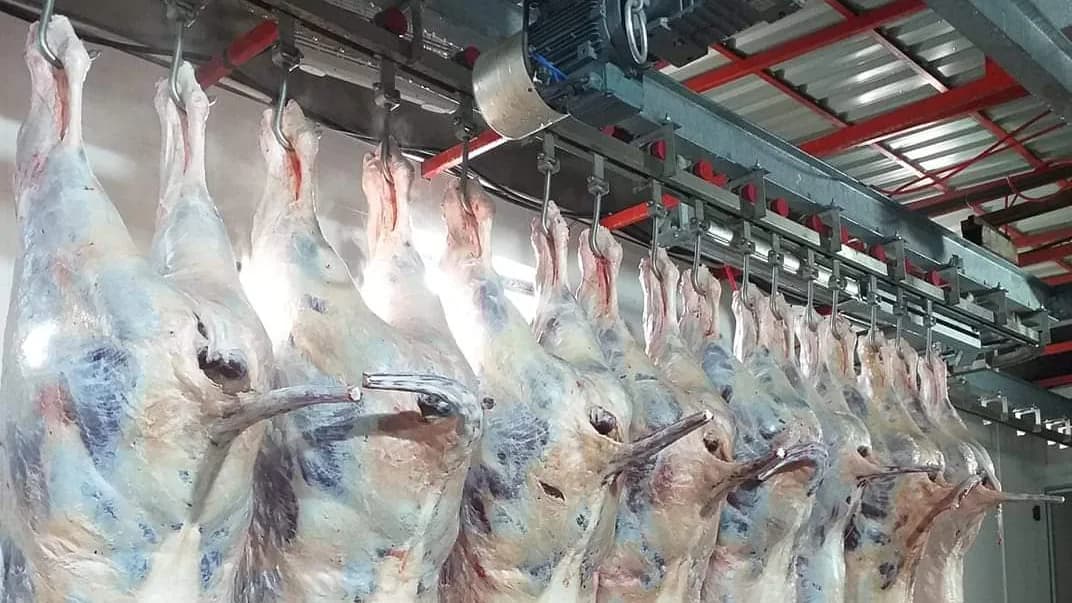
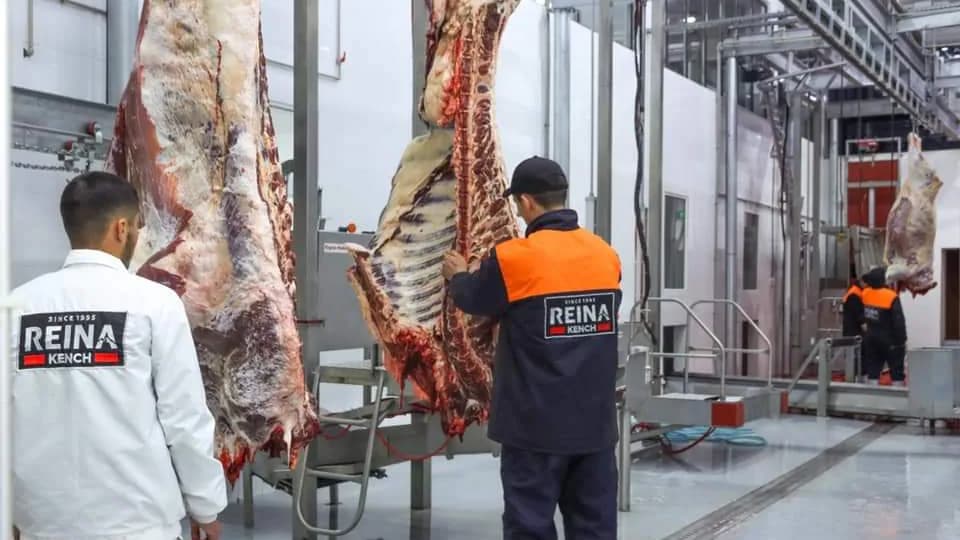
In a meat processing plant, hanging carcasses does more than make them easy to carry. Hanging height, the distance between products, line load and routing decisions directly affect how hygiene practices are carried out, product flow and traceability. The orderly row of carcasses in the photo shows how central a role rail and hook systems play.
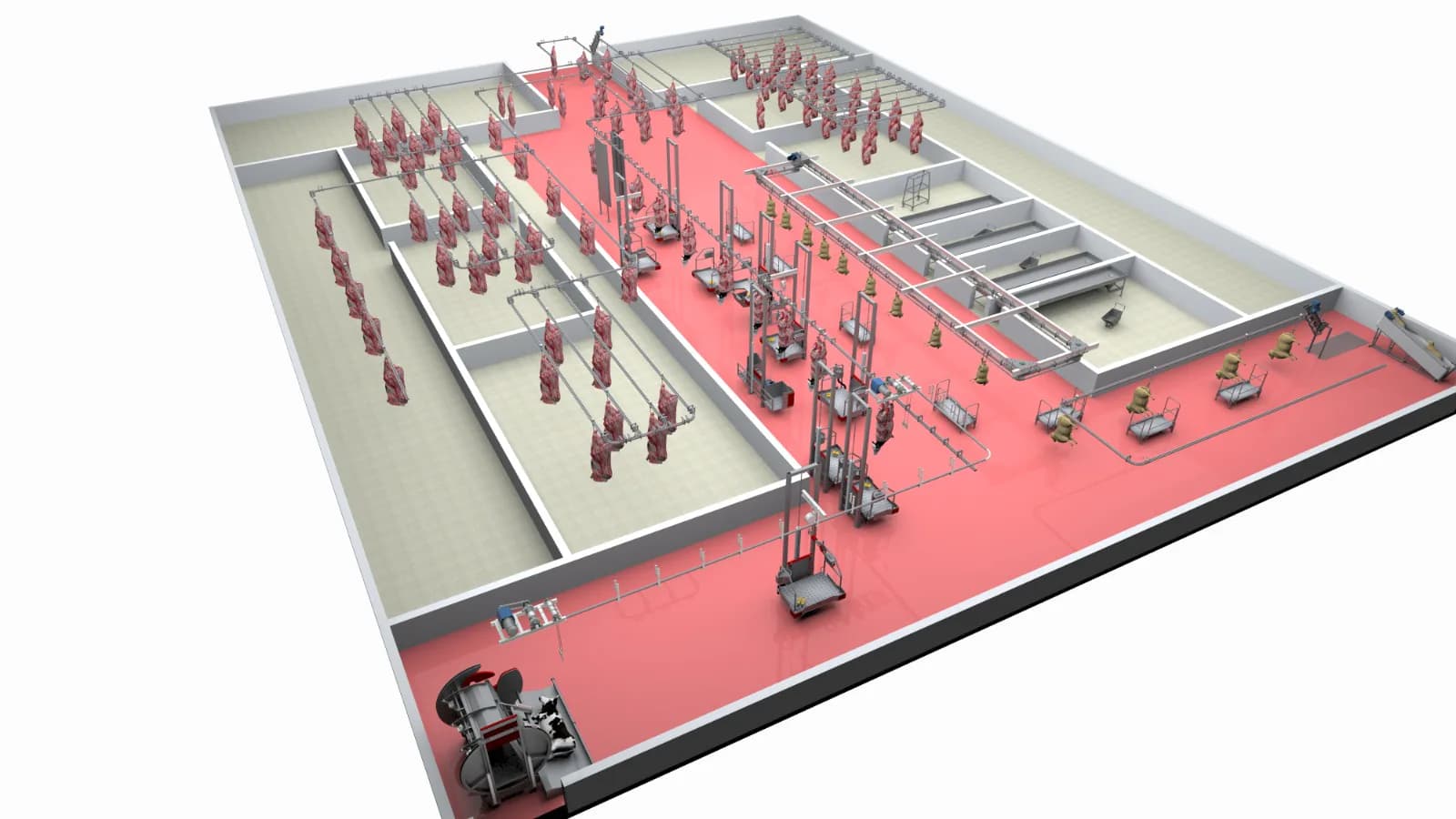
In designing carcass hanging lines, the aim is not to squeeze as many products as possible into a small area; it is to strike the right balance between safe load carrying, controlled product transfer and sufficient cleaning access.
What components make up a carcass hanging line?
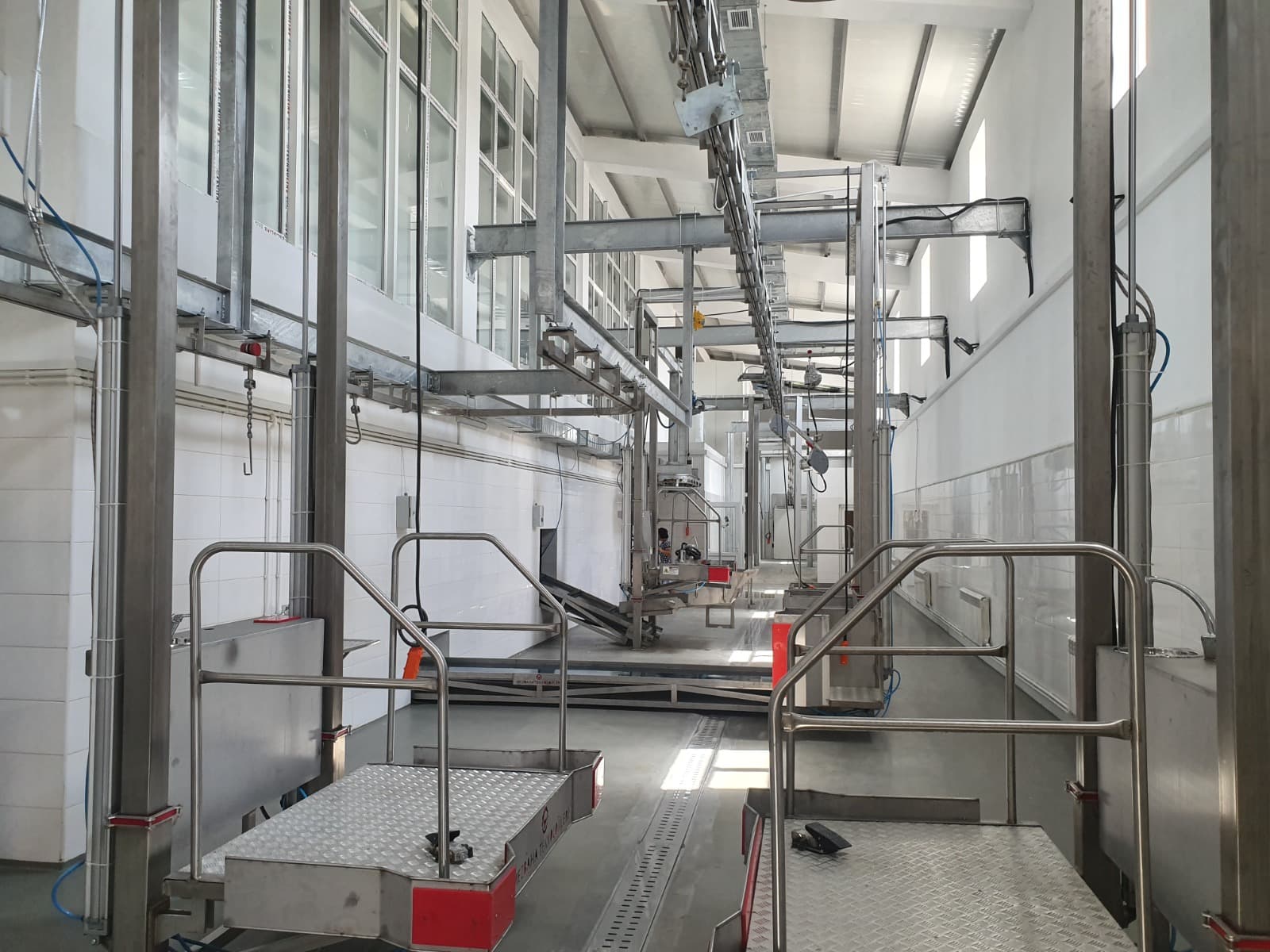
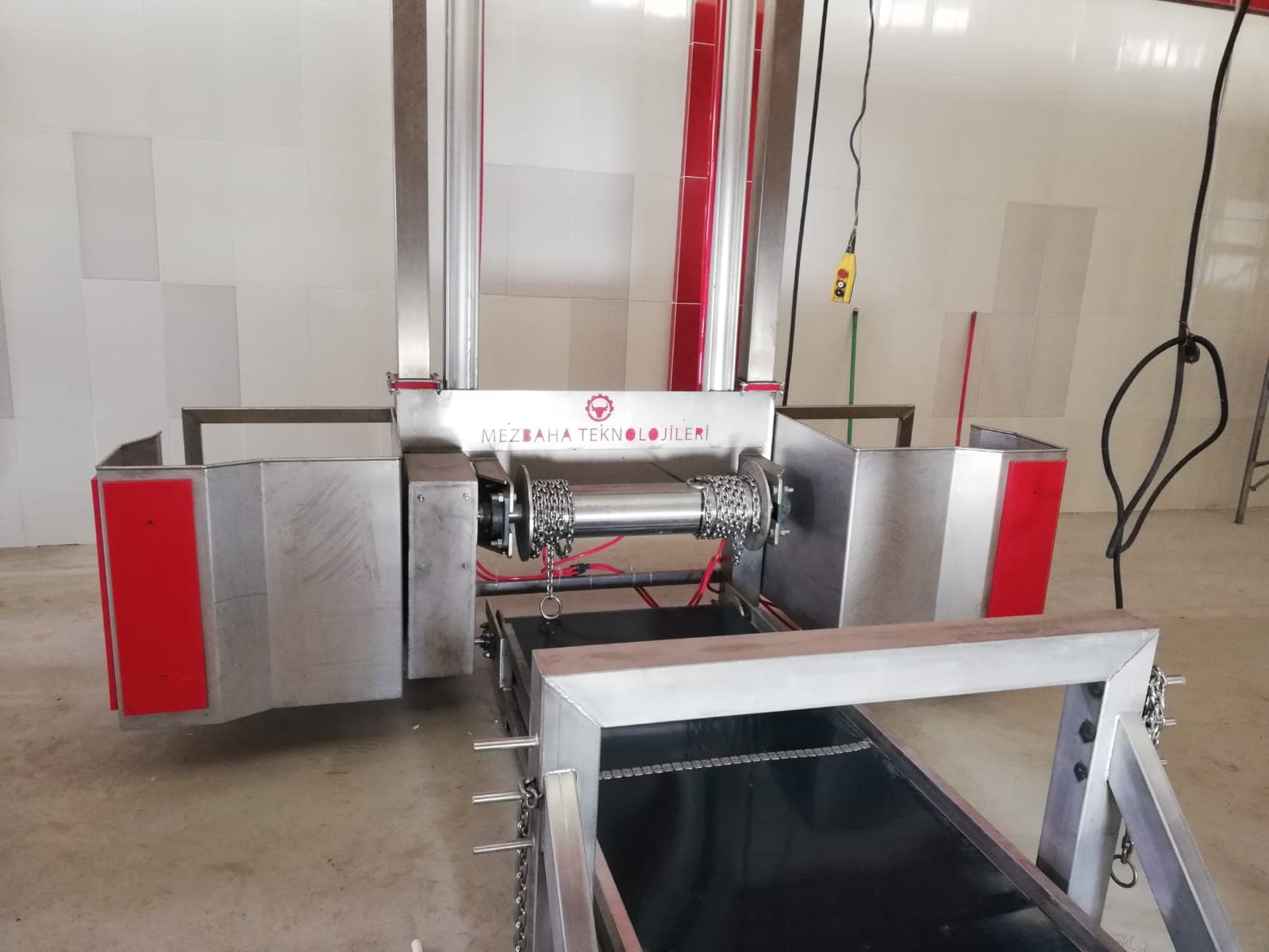
A hanging line generally consists of an upper supporting structure, a rail profile, suitable hook or trolley sets, routing and transfer elements and, where needed, motorised transfer equipment. The type of system to be used is determined by the animal species processed, the average carcass weight and the plant's process flow.
The surface finish, cleanability, load capacity and rail compatibility of hanging fittings should be assessed together. Worn, wrong-type or unmaintained hooks can create risks for both product safety and worker safety.
Why does the distance between products matter?
The distance between carcasses does not only determine how many products the line will take. Products that touch each other unnecessarily can make cleaning and inspection harder; in chilling areas where air circulation matters, the layout becomes critical as well. The suitable spacing should be defined by an engineering calculation according to carcass size, rail geometry, airflow and operating procedures.
For this reason it is not correct to give a single standard hanging spacing that applies to all plants. The suitable distance should be determined taking local regulations and the plant's risk analysis into account.
How is a hygienic line designed?
Hanging systems help prevent the product from touching the floor and unsuitable fixed surfaces. But this alone is not enough for hygiene: the rail and hooks must be cleanable, must be able to be dismantled for maintenance when necessary, and details that cause standing water or dirt build-up must be reduced.
- Prepare a cleaning programme for hooks and trolleys.
- Check areas at rail joints where dirt can build up and is hard to reach.
- Reduce the points where product and staff traffic cross.
- Plan drainage and floor cleaning under the hanging line.
- Record the line check after maintenance.
Carrying capacity and safe load calculation
When line capacity is calculated, not only the instantaneous number of products but also the likely weight range of carcasses, the hanging points, the supporting structure, and the motor and transfer elements should be examined together. Turning points and transfer connections are also important parts of the load-bearing chain.
The capacity of the supporting system should be verified within the manufacturer's technical data and the relevant engineering standards; load limits should be set in a way staff can see. Visual inspection during operation, planned maintenance and taking damaged equipment out of service are basic practices.
Traceability: which stage has the carcass passed through?
The identity of the carcass must not be lost during its movement through the plant. Matching batch, slaughter time, required inspection and process records with one another matters for nonconformity management and operational follow-up. The labelling or digital system used must suit hygienic operation.
Against the risk of misrouting to the wrong line or mixing up product order at transfer points, operator procedures and record checks can be defined. Traceability is not only a software project; it is a matter of physical line design.
How should the connection to the cold room be handled?
If the hanging line connects to a chilling or storage area, product density, door crossings, air circulation and the monitoring arrangement should be planned together. Chilling performance is not just the thermostat setting of the room; product load, how often the door opens and air distribution can affect the results.
Temperature targets should be set according to the product class and the regulations that apply, and verified with the plant's HACCP-based food safety procedures.
Audit checklist for operators
- Have rail-hook compatibility and load capacity been documented?
- Do carcasses touch each other or unsuitable surfaces?
- Are there points on hooks and rails that cannot be cleaned?
- Has the risk of misrouting at transfer junctions been assessed?
- Are identity, batch and inspection records preserved along the line?
- Have product load and air circulation in chilling areas been examined together?
Frequently asked questions
What is the difference between a carcass hanging system and a conveyor system?
A hanging system covers the components that keep the carcass safely suspended and carry it along the rail. A conveyor is the name given to solutions in which this movement is carried out by motor or automatically.
Does a denser hanging layout always give higher efficiency?
No. An overly dense layout can make cleaning access, product separation, inspection and cold room applications harder. Efficiency should be assessed through the balance of capacity and hygiene.
Conclusion: the hanging layout affects the reliability of the whole process
Carcass hanging lines are among the invisible but critical infrastructures of the production flow. The right hook, rail, spacing and tracking system supports the application of hygiene procedures, safe working and controlled product dispatch.
Technical assessment for your project: If you plan to increase the capacity of your existing hanging line or to set up a new cold room connection, evaluate your product type, target capacity and layout plan with the technical team.