Pneumatic vs Hydraulic Cattle Restraint Boxes: Buyer’s Guide
Choosing between a pneumatic cattle restraining box and a hydraulic cattle restrainer is not simply a question of which system is faster.
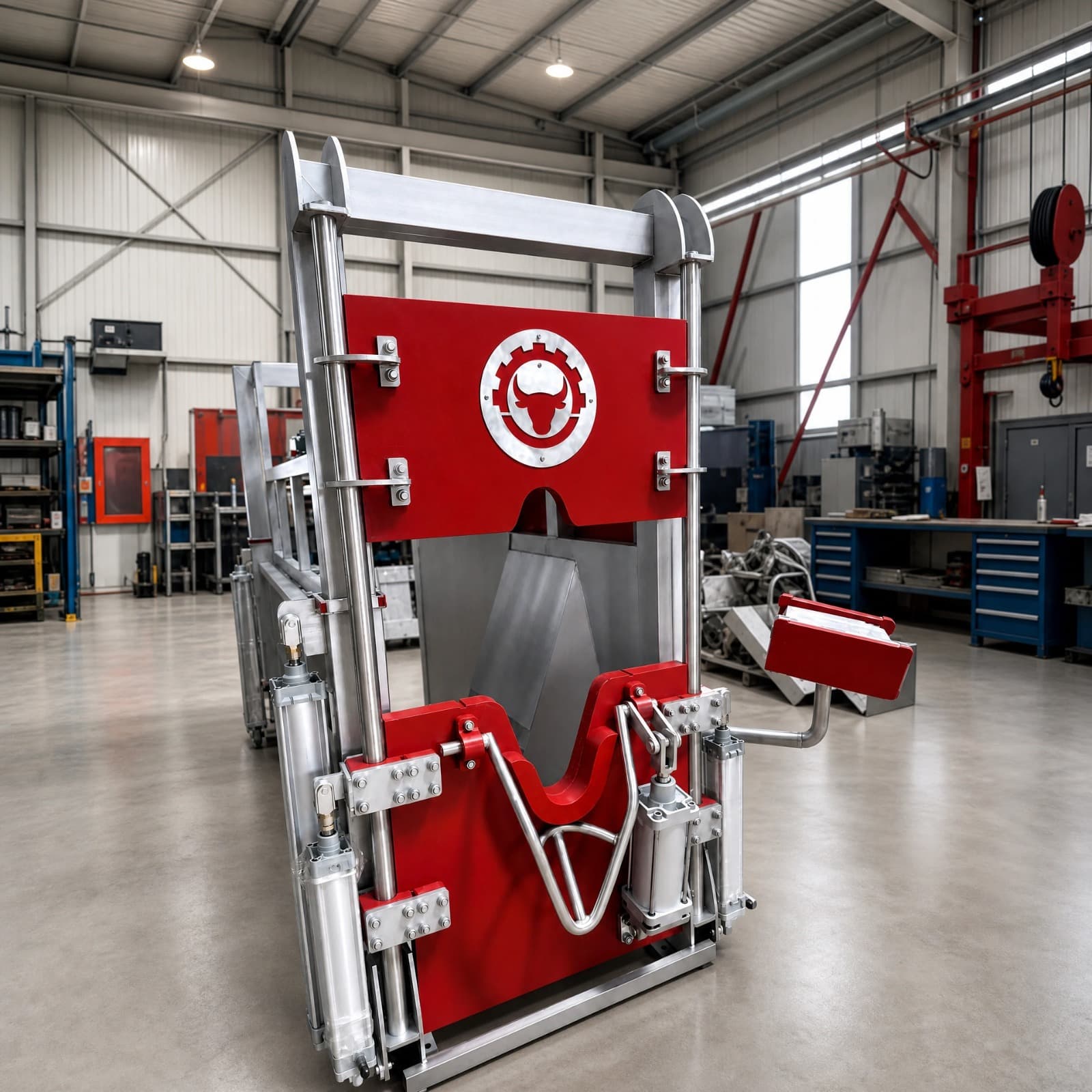
Choosing between a pneumatic cattle restraining box and a hydraulic cattle restrainer is not simply a question of which system is faster. Both technologies can provide controlled movement, but their power supply, maintenance requirements, control characteristics and total installed cost differ. The right selection begins with cattle characteristics, slaughter procedures and the existing plant infrastructure.
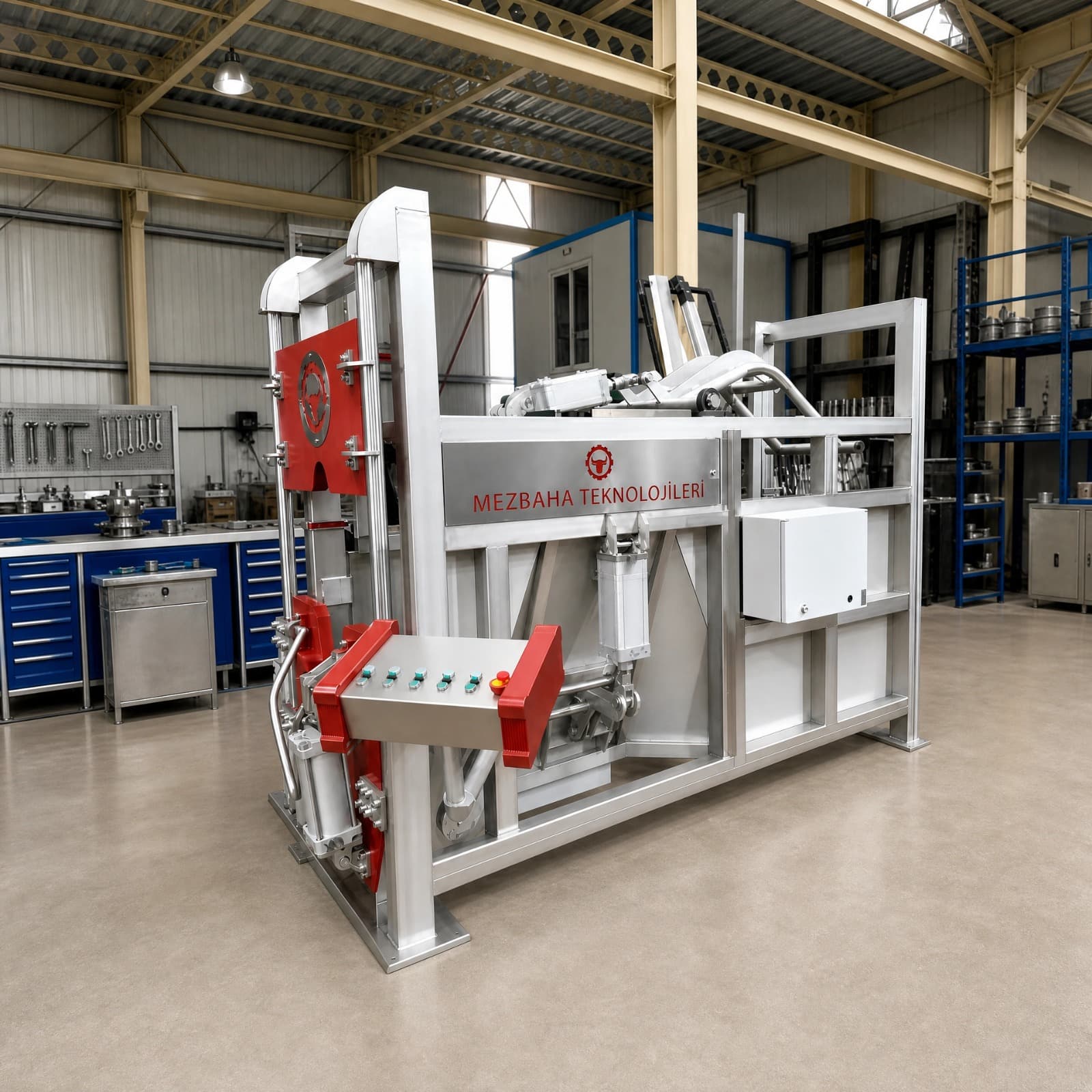
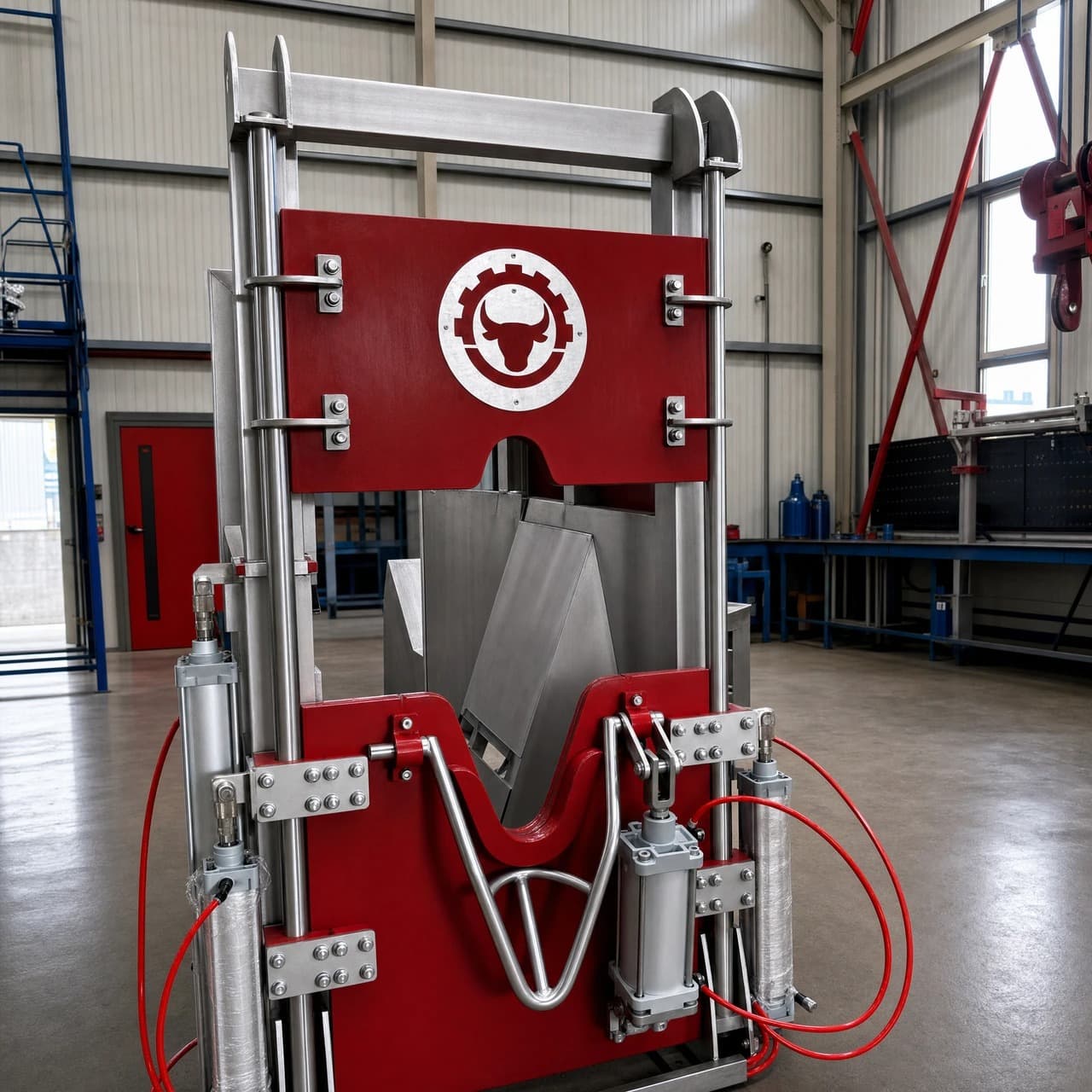
The photograph illustrates Mezbaha Teknolojileri’s upright pneumatic cattle box. Its published features include AISI 304 stainless steel, a neck apparatus, an under-lift system and a rear pushing arm. This is not an image of a hydraulic machine and it should not be described as one.
Pneumatic vs hydraulic: the engineering distinction
Pneumatic systems use compressed air to actuate cylinders. They require correctly sized compressor capacity, dry and filtered air where specified, regulation and appropriate valve controls. Hydraulic systems transmit force through pressurized fluid and generally require a power unit, lines, seals, pressure management and a leak-control plan. Both can include electrical controls and both require proper guarding, energy isolation and trained operators.
Neither drive type is automatically more humane, more halal-compliant or safer. Animal handling outcomes depend on geometry, pressure settings, travel limits, operator competency, time in restraint and the actual method of slaughter.
Compare functions, not marketing adjectives
| Decision factor | Pneumatic restraint box | Hydraulic restraint box |
|---|---|---|
| Primary utility | Compressed-air supply | Hydraulic power unit/fluid circuit |
| Site checks | Compressor capacity, air quality, pressure drops | Power-unit space, fluid leaks, pressure and hoses |
| Control review | Cylinder timing, air regulation, safe exhaust | Flow, pressure regulation and safe depressurization |
| Maintenance | Air leaks, valves, cylinder seals, filters | Hoses, seals, fluid condition, fittings |
| What to verify | Measured cycle and animal-size fit | Measured cycle and animal-size fit |
The table describes general engineering considerations, not guaranteed performance for a particular supplier. Request technical drawings and an observed factory acceptance test instead of treating generic comparisons as specifications.
Fixed upright versus rotary ritual boxes
A second decision concerns the physical restraint method, not just the drive medium. An upright box keeps cattle in an upright orientation; rotary boxes reposition the animal using a rotating mechanism. Leading competitors offer both approaches. A project should decide which configuration is permitted and appropriate for the approved ritual method, welfare assessment, operator access and available floor space. The pictured upright box should not be confused with the separate circular model.
What cattle size does the box need to handle?
A purchasing sheet should state the minimum and maximum animal dimensions, not only “all cattle.” Include live weight, shoulder and hip widths, horn configuration, approximate height, and the likely mix of animals through the shift. Ask how the neck support and rear pusher are adjusted without excessive force, and how the box safely releases an animal when an abnormal event occurs. Welfare standards favor appropriate restraint over unnecessary force or delays.
Sanitation and reliability questions
For a wet beef-processing environment, inspect stainless-steel grade, welded joints, crevices, cleaning reach, drainage and the isolation of control components. Compare daily inspection tasks and planned spares. A nominally fast machine that regularly stops for cleaning or repair can reduce real throughput. Avoid unsupported claims of guaranteed hourly capacity until the supplier provides an installation-specific figure and test conditions.
A seven-point RFQ checklist for U.S. buyers
- State whether the process is conventional stunning or a particular religious slaughter procedure; obtain regulator/certifier input.
- Confirm upright or rotary restraint requirements and planned animal-size range.
- Attach the line drawing showing animal entry, personnel positions, discharge and traffic paths.
- Give available compressed air, electricity and washdown provisions.
- Request general arrangement, utility load, anchor layout and emergency release details.
- Require operator training, warranties and spare-parts documentation.
- Compare suppliers on verified operating data rather than marketing capacity claims.
Frequently asked questions
Which type uses less energy?
That cannot be answered for every plant. Compressed-air generation has a cost, while hydraulic power packs have their own energy losses. Compare a quoted duty-cycle measurement under the same operating assumptions.
Does pneumatic mean there are no electrical components?
No. The main actuators may be pneumatic, while compressors, control panels or other connected plant systems still use electricity. All utilities require a safety review.
Can a hydraulic ritual box replace an upright pneumatic one directly?
Not without checking footprint, animal orientation, interfaces, utilities and the approved slaughter procedure. Treat it as an engineering change.
Request a like-for-like technical comparison
Mezbaha Teknolojileri lists a pneumatic Halal Cattle Stunning Box and separate rotary products. Share your planned process, plant utilities and cattle range for a specification-led quotation. This will make competing offers easier to evaluate on real requirements.
Editorial references
- Mezbaha Teknolojileri — product specifications
- United States — 7 U.S.C. § 1902
- WOAH — Terrestrial Code Chapter 7.5