Overhead Sheep Conveyor Systems: Chains, Rails and Carcass Handling
Compare overhead chain, rail and carcass carrier design, including curves, cleaning access and quotation requirements.
An overhead sheep conveyor system moves suspended carcasses through selected stages of a slaughter and processing line. Its performance depends on much more than the length of the chain. Rail geometry, carrier design, drive arrangement, curves, access and operating controls all influence whether the system fits a particular lamb processing facility.
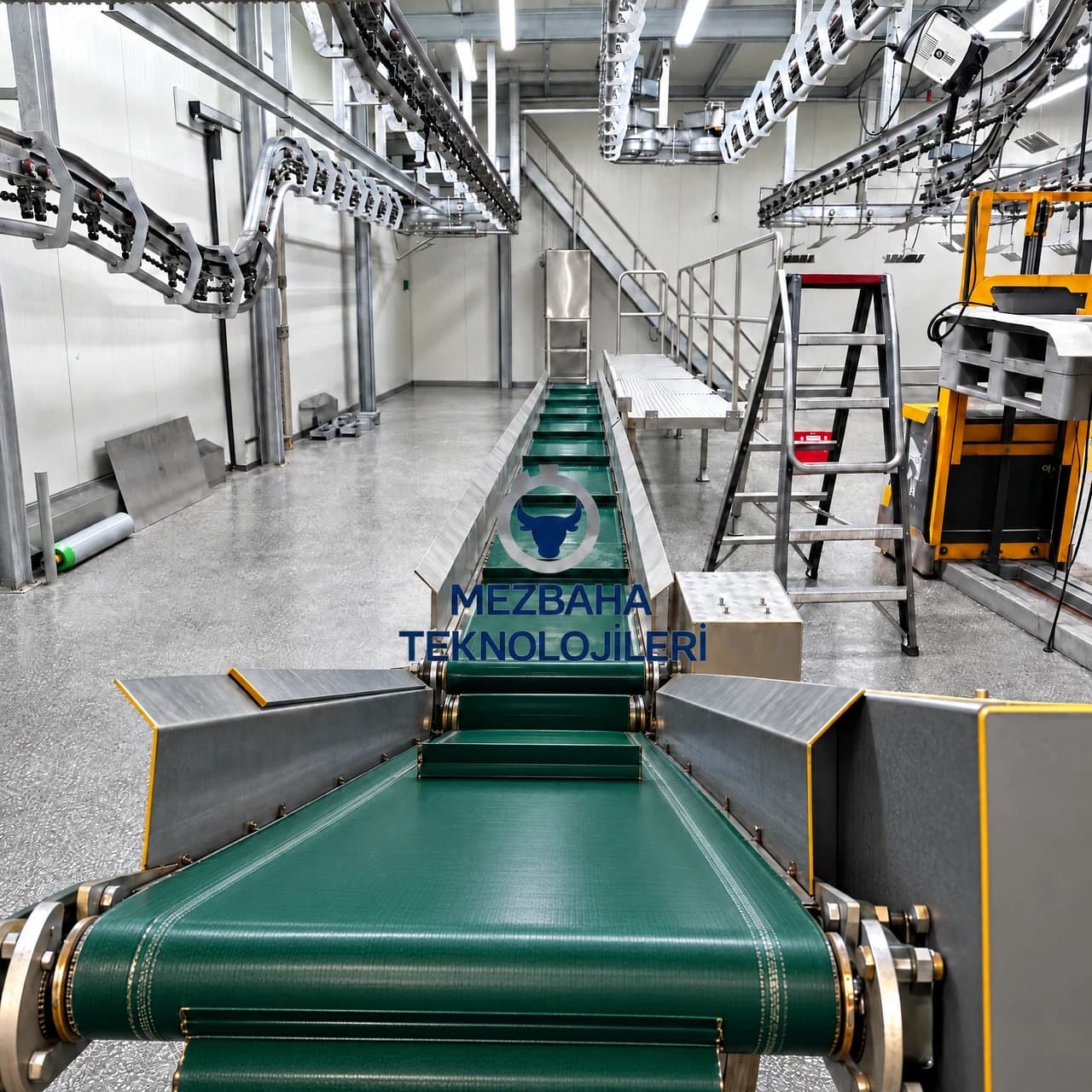
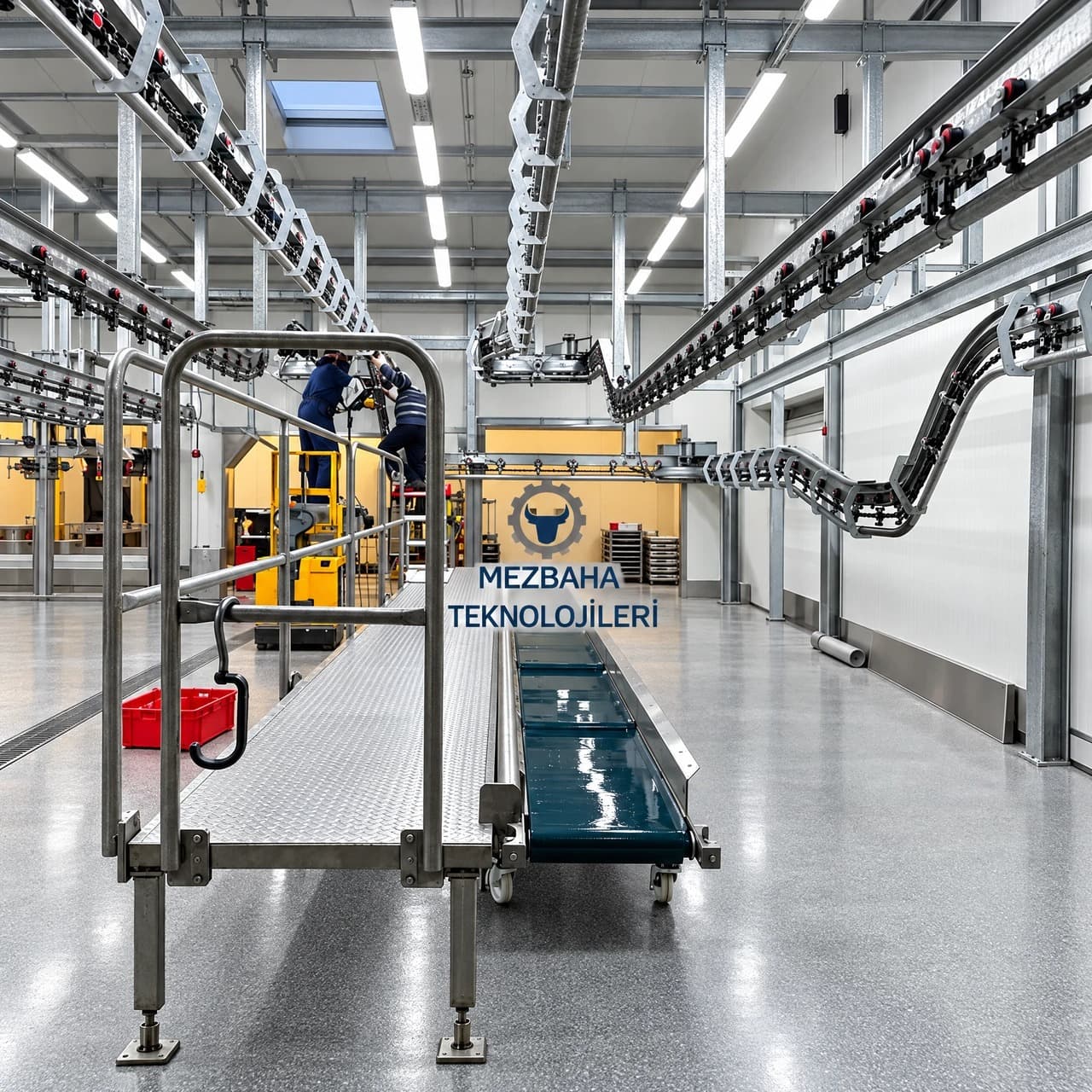
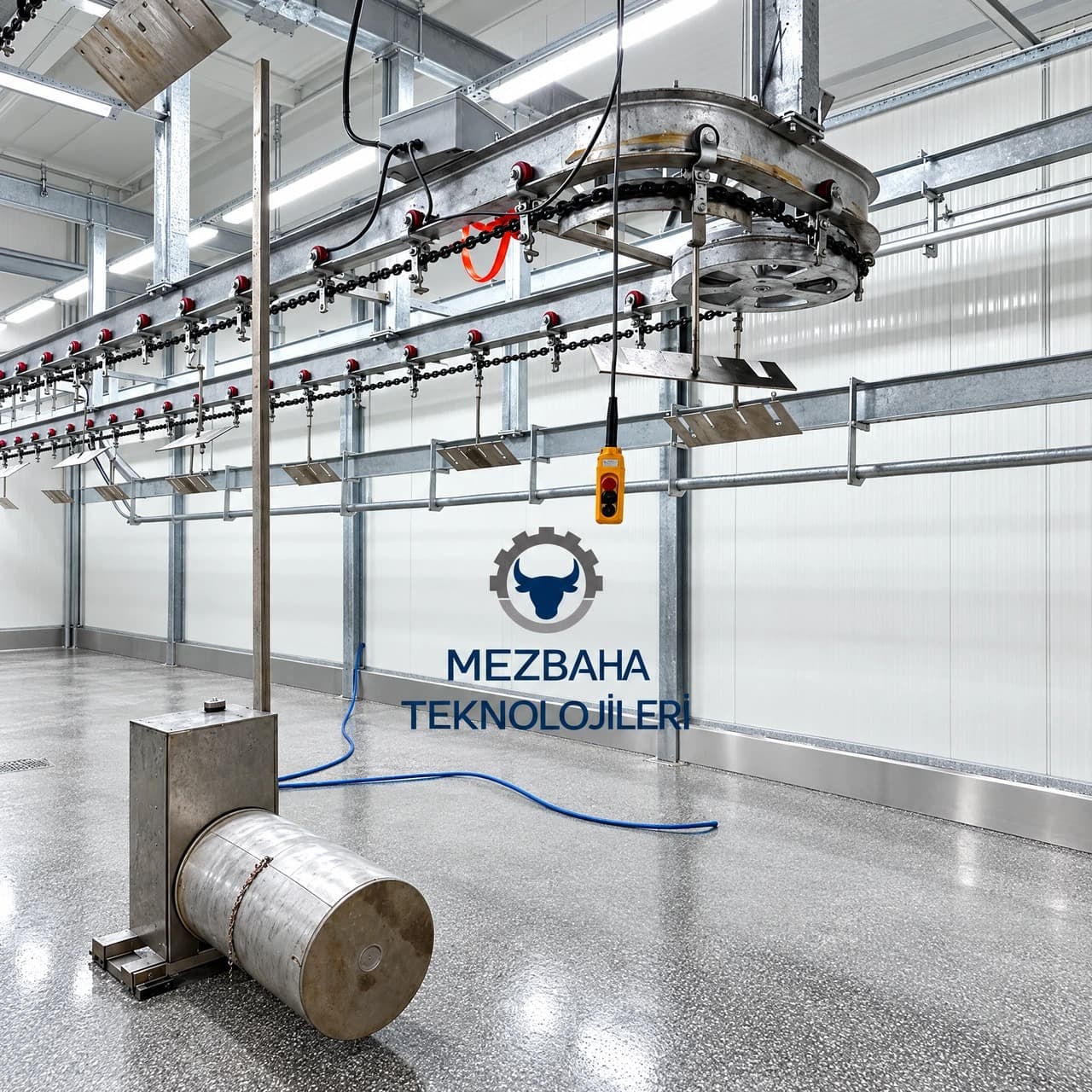
The second supplied image shows a suspended chain and rail installation with red guide rollers, a curved overhead section, hanging hardware and a pendant control. These are visible design elements—not proof of a specific manufacturer’s performance, load rating or compliance status.
How an overhead carcass conveyor works
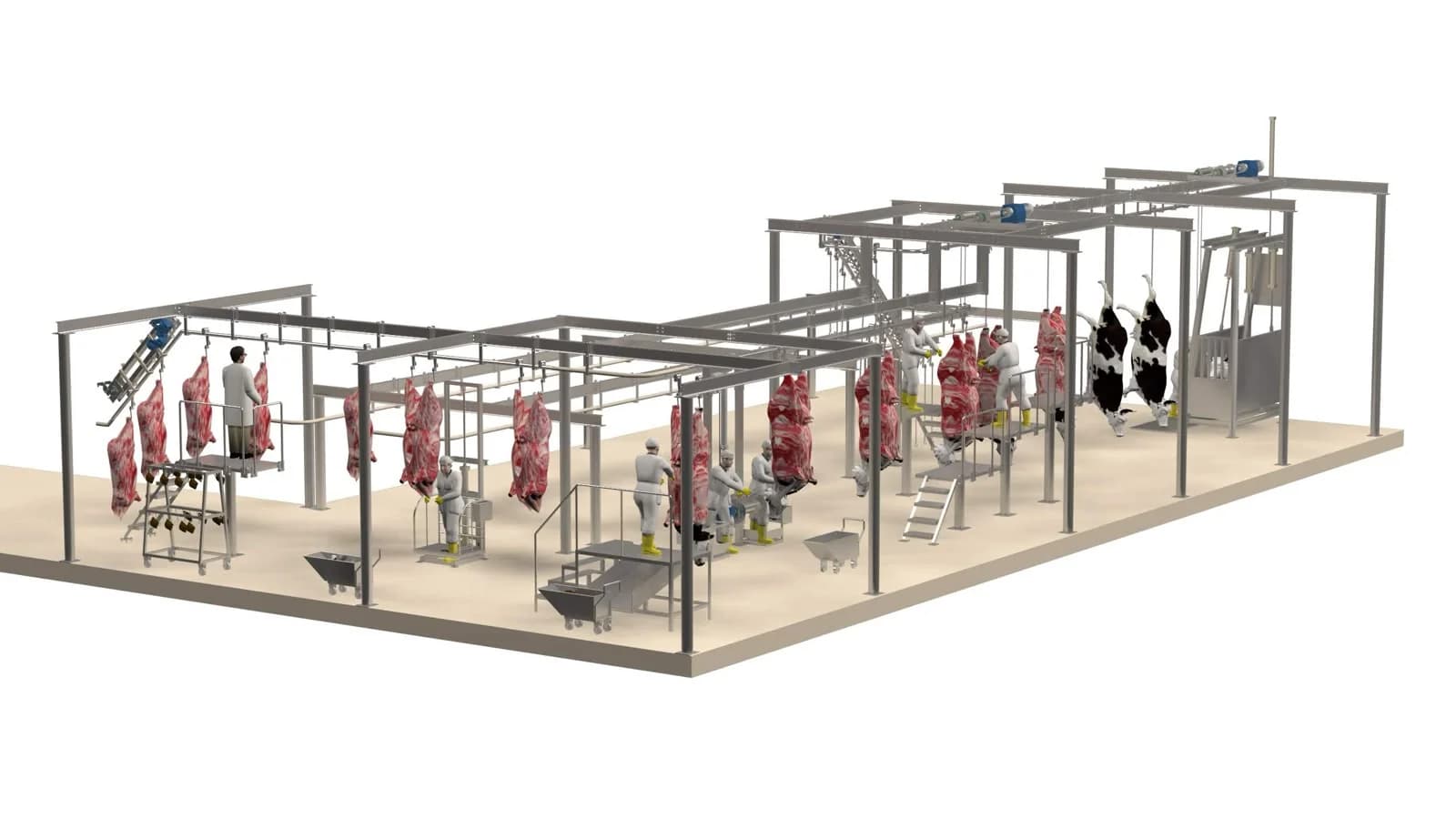
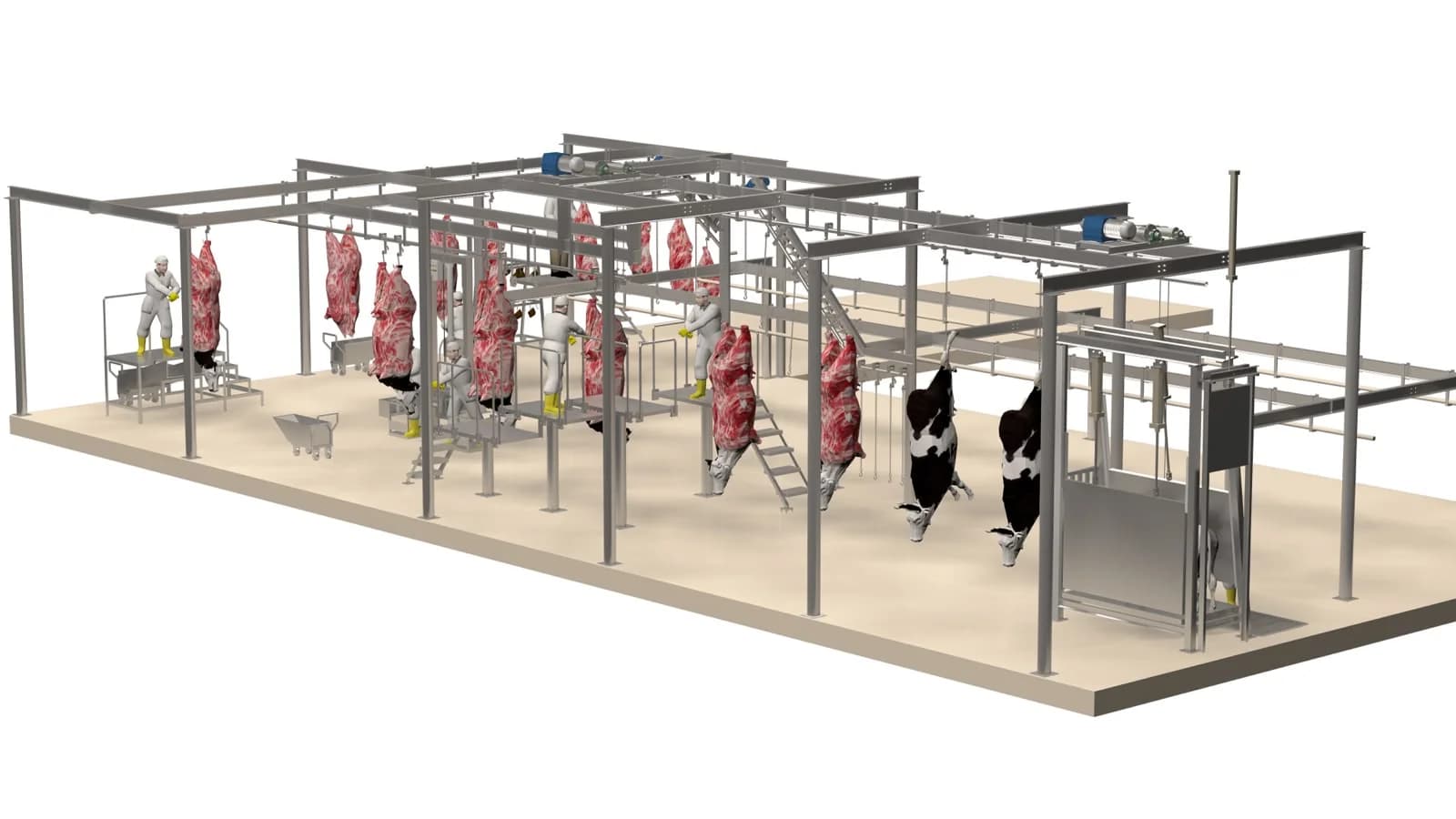
A powered configuration typically uses a drive system to move a chain and associated carriers along a planned route. Hooks or other approved carriers support the carcasses while operators work at appropriate stations. Depending on the installation, straight sections may be joined by curves and transitions. Some projects combine powered movement with manually controlled sections or dedicated transfer points.
Each transition deserves special attention. A curve that appears simple in a photograph may introduce different clearances, forces and maintenance needs than a straight rail. Ask how carriers remain guided around turns, how the chain is tensioned and where the drive and return arrangements are located.
Compare chain, rail and carrier details
For a meaningful equipment comparison, request a component schedule rather than a single line-item description. It should identify rail or frame sections, chain type, rollers, carriage intervals, hooks, corrosion protection and intended cleaning methods. Materials should be suitable for the actual processing environment and for their intended contact with edible product.
The Sheep Processing Conveyor product page from Mezbaha Teknolojileri describes a chain-driven conveyor with directional turns, polyethylene trolley wheels and stainless-steel hangers. Treat published figures as product-specific information subject to engineering confirmation; do not transfer those figures to every photographed system or configuration.
Plan curves, loading and line stops
A good overhead meat rail design considers carcass weight range, hanging intervals and allowable clearance around structural columns and adjacent equipment. Check potential contact with platforms and personnel. Ensure that line stoppages, restart behavior and any accumulation zones are addressed in the controls concept.
The installation also needs an appropriate risk assessment covering moving parts, emergency stopping, guarding and isolation for maintenance. Safety functions and machine integration should be determined by qualified specialists for the actual site, not inferred from a visible pendant switch.
Cleaning access matters as much as movement
Overhead hardware can be difficult to clean because chains, junctions and support components are high above the operating floor. Discuss access for sanitation personnel, lubricant management, prevention of contamination and practical inspection routes before the line is installed. Design the surrounding floor and drains for the establishment’s washdown procedures.
In the United States, federally inspected meat plants must address applicable USDA-FSIS sanitation and HACCP requirements. Under 9 CFR 416.3, equipment used to process or handle edible products must facilitate thorough cleaning and be maintained in sanitary condition. Buying a particular conveyor does not independently establish that the facility meets those requirements.
Questions to ask an overhead conveyor supplier
Ask for a dimensioned route drawing; expected carcass weight range; estimated operating speed and spacing assumptions; curve details; chain tensioning approach; support and anchoring requirements; electrical and control interfaces; emergency-stop philosophy; replacement parts; and cleaning and maintenance instructions. Clarify which items are supplied and which remain the building contractor’s responsibility.
A good quotation should connect technical choices to the actual production flow. If a proposed conveyor is integrated with a sheep bleeding elevator, work platform or secondary conveyor, each transfer point should be reviewed as a separate interface.
Frequently asked questions
What is the difference between a meat rail and an overhead conveyor?
A rail provides a guided path; a powered overhead conveyor adds a mechanism to move carriers along that path. Actual systems may combine elements of both.
Are overhead sheep conveyors only for large plants?
No. Suitability depends on layout, production requirements, maintenance capability and budget—not size alone.
Do curved conveyors require special consideration?
Yes. Direction changes affect carrier guidance, clearances, support and maintenance; they should be engineered for each installation.
Discuss your overhead sheep processing equipment
Share your overhead route, processing stations and projected operating conditions with Mezbaha Teknolojileri to review a project-specific sheep carcass handling concept.
Technical references: Mezbaha Teknolojileri — Sheep Processing Conveyor; 9 CFR § 416.3 — Equipment and Utensils.