Sheep Slaughter Conveyor Systems: Planning an Efficient Lamb Processing Line
An engineering-oriented guide to layout, workstation pacing, hygiene and supplier questions for sheep slaughter conveyor projects.
A sheep slaughter conveyor system is more than a moving rail. It connects the carcass transfer point, dressing workstations, inspection access and downstream handling into one coordinated production flow. For a US lamb processing plant, planning the conveyor at the same time as the building layout can prevent costly conflicts between overhead steelwork, platforms, personnel routes and sanitation access.
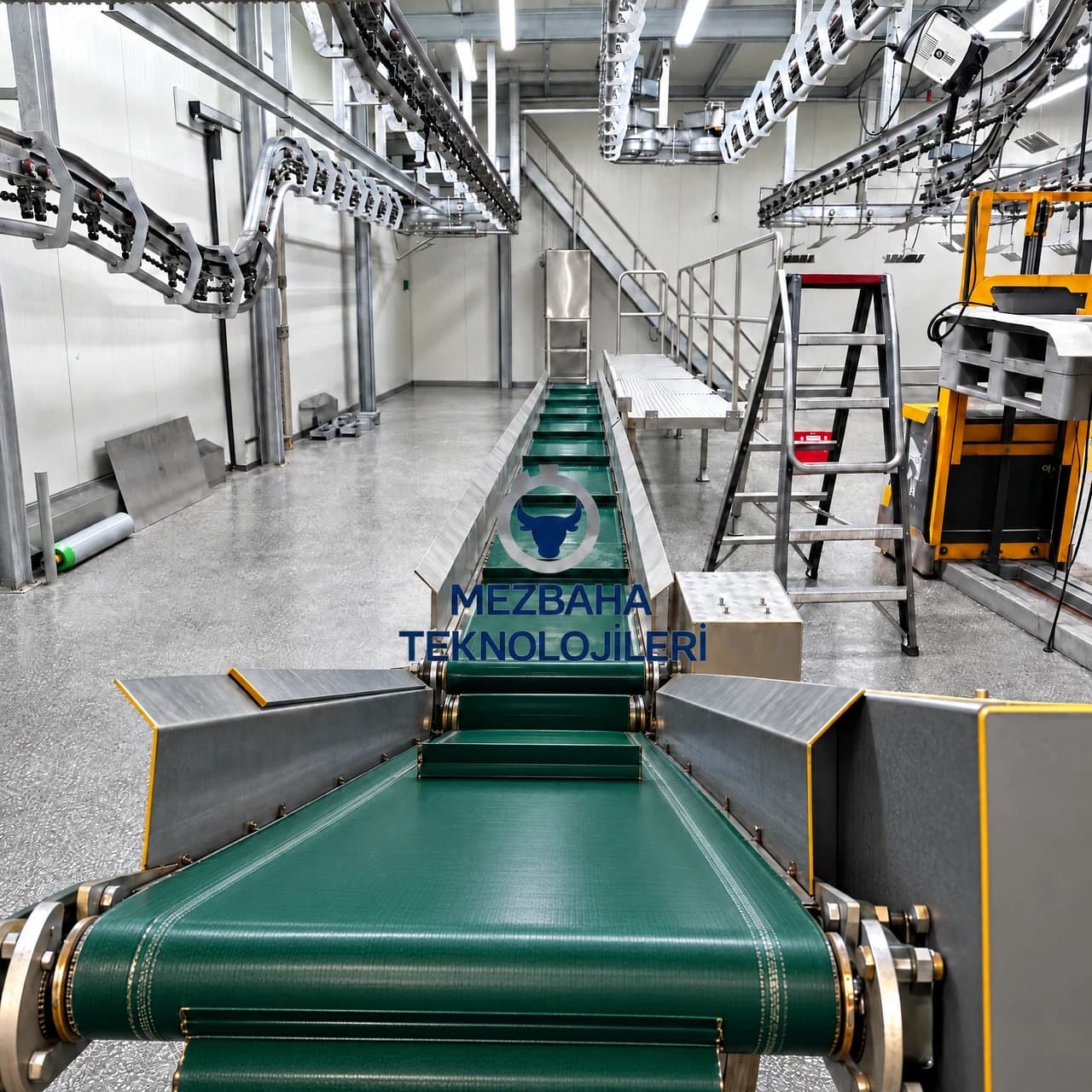
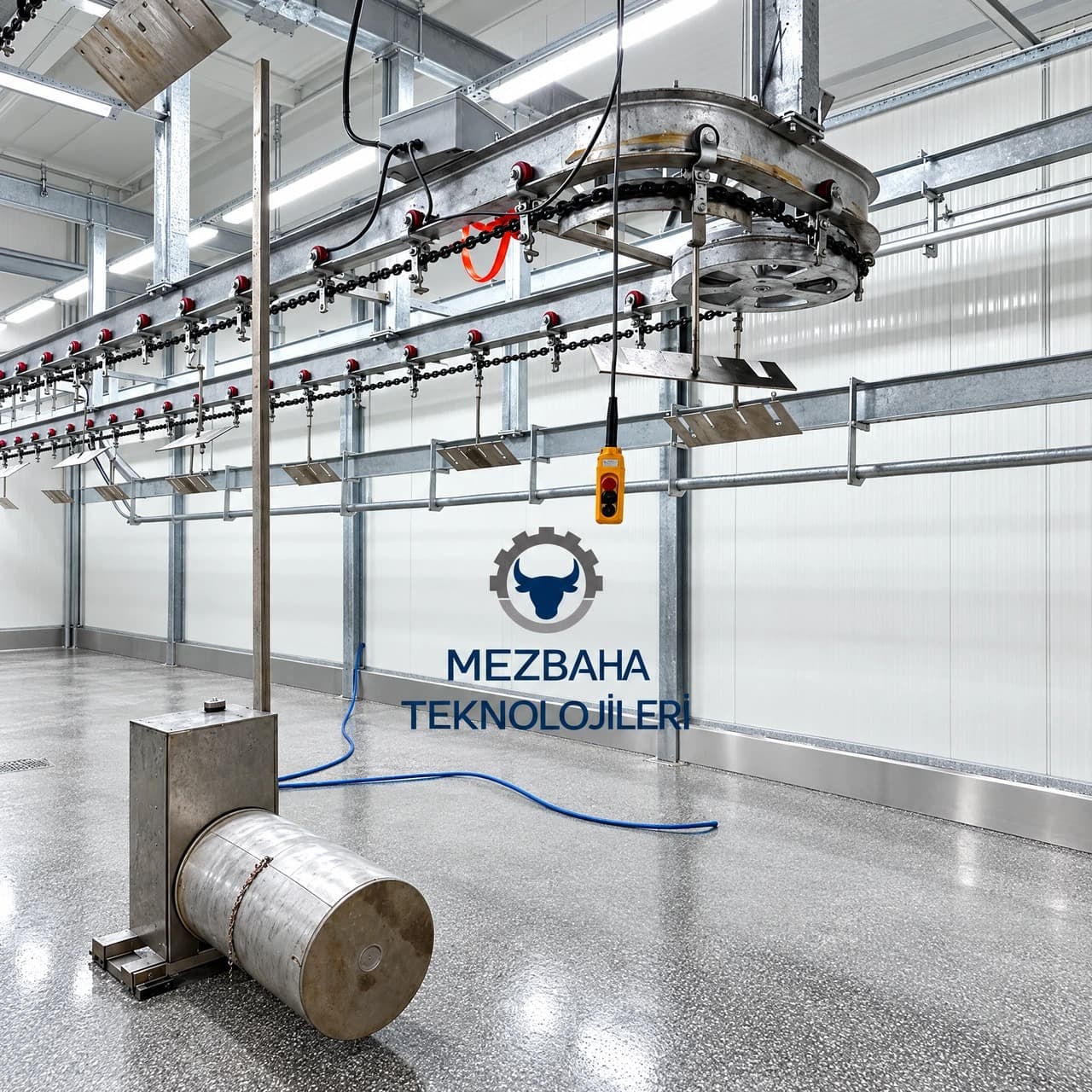
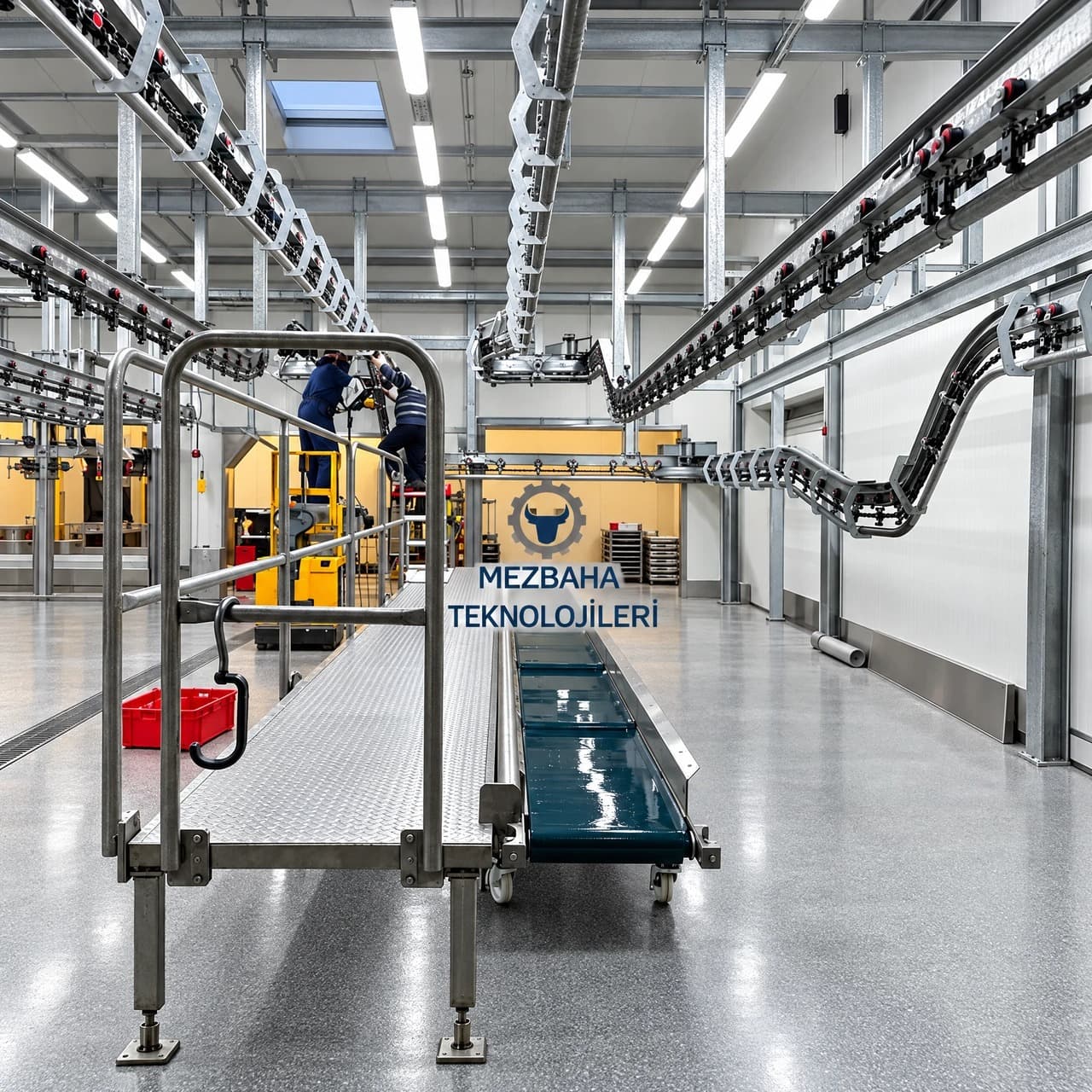
The accompanying project photograph shows a clean industrial room with overhead chain-conveyor runs, a raised work platform, work being performed on the installation, and a lower conveyor. It illustrates how multiple pieces of equipment must fit together; it does not, by itself, verify capacity, regulatory approval or a completed installation.
Start with the process, not the conveyor length
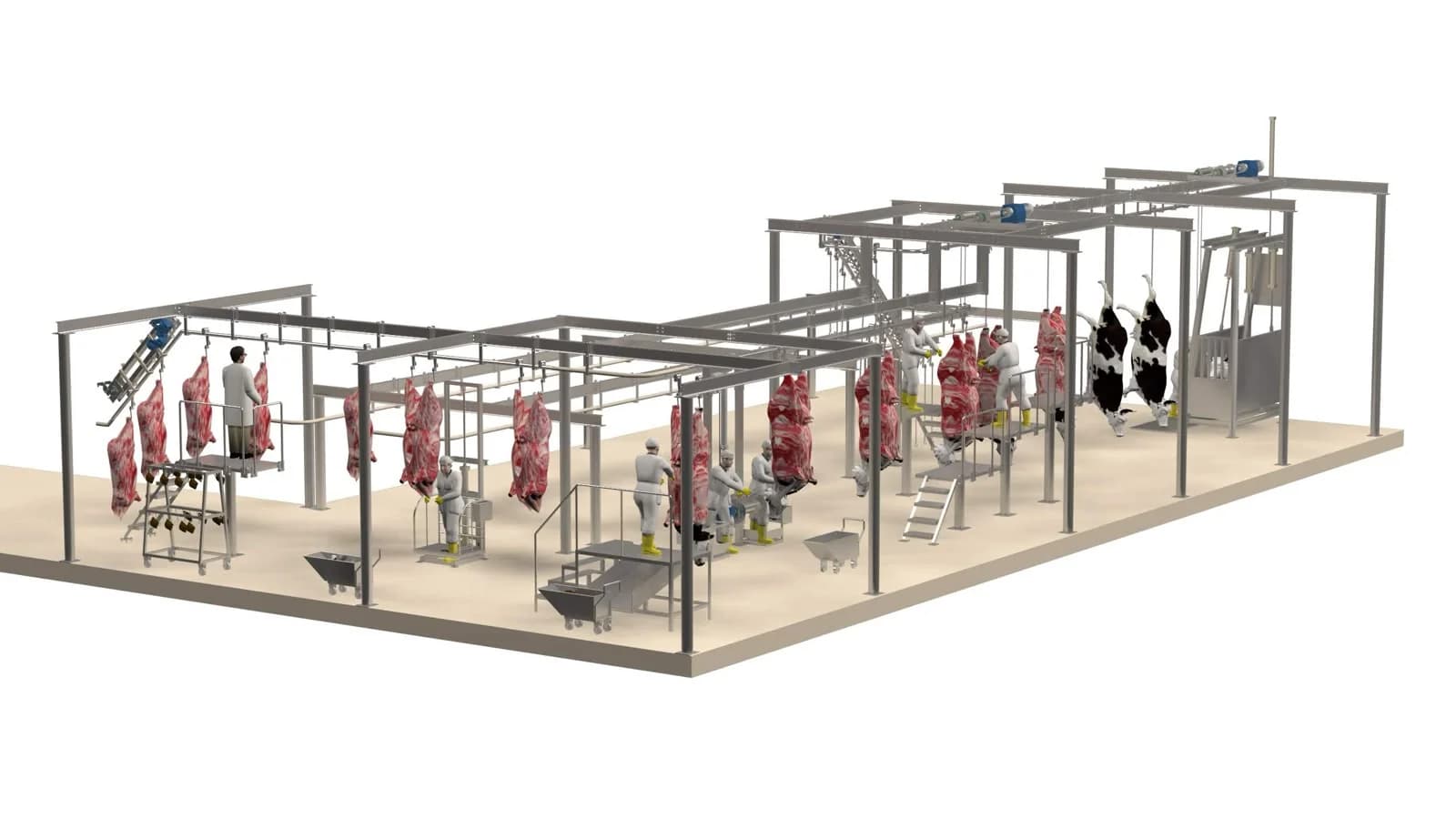
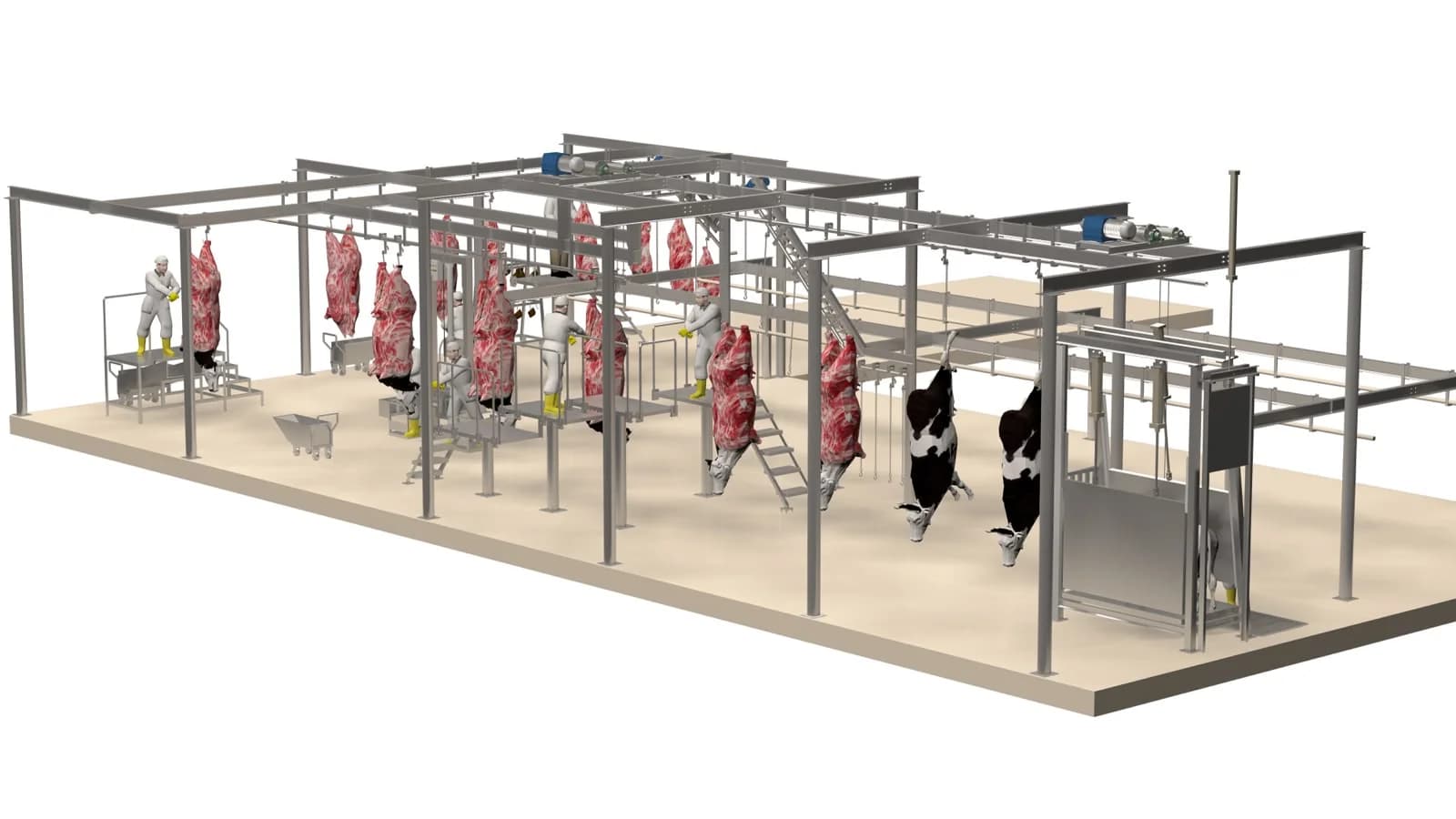
Before requesting a quotation, draw the entire carcass path. Mark the point where sheep carcasses enter the overhead system, each planned processing station, inspection and holding positions, and the transfer to the next authorized handling area. Separately mark the movement of operators, tools, waste and clean product.
A useful concept layout answers five questions: What happens at each station? Where does the carcass move next? Who needs access? What happens during a line stop? How will the area be cleaned? The route must work for the intended plant—not simply match an attractive equipment drawing.
Match line speed to the slowest practical workstation
Buyers often start with a target number of head per hour. That is only one input. Actual throughput also depends on available carcass spacing, station cycle times, holding capacity, staffing, shifts, inspection arrangements and downstream equipment. A faster motor cannot resolve a transfer bottleneck or insufficient working space.
Ask the supplier to explain its design assumptions and identify the station that determines line pace. For early feasibility, compare several operating scenarios rather than presenting an unsupported single capacity figure. Keep allowances for sanitation breaks, routine stoppages and safe recovery after an interruption.
Coordinate overhead rail routes and elevated platforms
In the first photograph, overhead conveyor lines and a stainless-looking raised platform share the same room. This is exactly the type of interface that needs coordinated engineering. Check rail elevation, operator reach, guarding, access ladders, transfer clearances, structural attachment points, floor drains and safe maintenance access.
A licensed or otherwise qualified project engineer should review support loads, anchors, building structure and locally applicable design criteria. Neither a photograph nor a generic product specification is a substitute for project-specific verification.
Design for hygiene and US operating requirements
For federally inspected meat establishments in the United States, USDA-FSIS sanitation requirements under 9 CFR Part 416 and HACCP requirements under 9 CFR Part 417 are relevant planning references. Equipment used to handle edible product must facilitate cleaning and be maintained in sanitary condition. The plant operator is responsible for developing and implementing applicable sanitation and food-safety controls.
When comparing sheep slaughterhouse equipment, review cleanability at conveyor corners, carrier points, contact surfaces and adjacent platforms. Plan access for cleaning crews and safe isolation of powered equipment. Do not describe any proposed conveyor as “USDA approved” unless the specific statement has been independently substantiated; regulatory compliance is assessed in the context of the establishment and its processes.
What to include in a supplier RFQ
Send the plant location, architectural drawings, intended sheep or lamb weight range, approximate production target, workstation sequence, room elevations, utilities, cleaning requirements and any existing rail interfaces. Request a marked-up layout, proposed equipment boundaries, maintenance clearances, control logic description and a clear list of assumptions and exclusions.
For an overview of the relevant equipment category, see Mezbaha Teknolojileri’s Sheep Processing Conveyor. Its published specifications are useful discussion inputs, but final dimensions, drive selection and suitability should be confirmed for the actual project.
Frequently asked questions
What is a sheep slaughter conveyor system?
It is an arrangement of rails, chains, carriers or transfer equipment designed to move carcasses through selected processing stations. The exact configuration depends on the plant workflow.
Does higher conveyor speed always mean higher output?
No. Practical output is also limited by station times, spacing, inspection needs, labor and downstream equipment.
Can the same layout be used for every lamb processing plant?
No. Building dimensions, local requirements, process stages and production goals must be reviewed for each installation.
Plan your lamb processing line with a coordinated layout
Mezbaha Teknolojileri can review an initial sheep slaughterhouse layout and discuss equipment options. Share your process flow and target operating conditions to request a project-specific quotation.
Technical references: 9 CFR Part 416 — Sanitation; 9 CFR Part 417 — HACCP Systems.