Pneumatic Work Platform vs. Fixed Platform in a Slaughterhouse: How to Choose Station Height
A comparison of an adjustable pneumatic transferring platform with fixed platforms, and the questions to ask before you buy.
Every station on a cattle slaughter line has a working height that suits its task: tail opening, transfer, trimming, inspection. Fixed platforms set that height once. A pneumatic platform lets the height change with the animal and the operator. This article compares the two and lists what to check before you choose.
Fixed platforms: simple and stable
Fixed platforms are used at many stations in a slaughterhouse, for example as tail opening, skinning, veterinary inspection, breast opening or trimming stations. Mezbaha Teknolojileri's fixed platform pages describe typical heights between 1,200 mm and 1,500 mm. With no moving parts there is little to maintain. The trade-off is that one height has to serve every animal and every operator.
Pneumatic platforms: height that follows the work
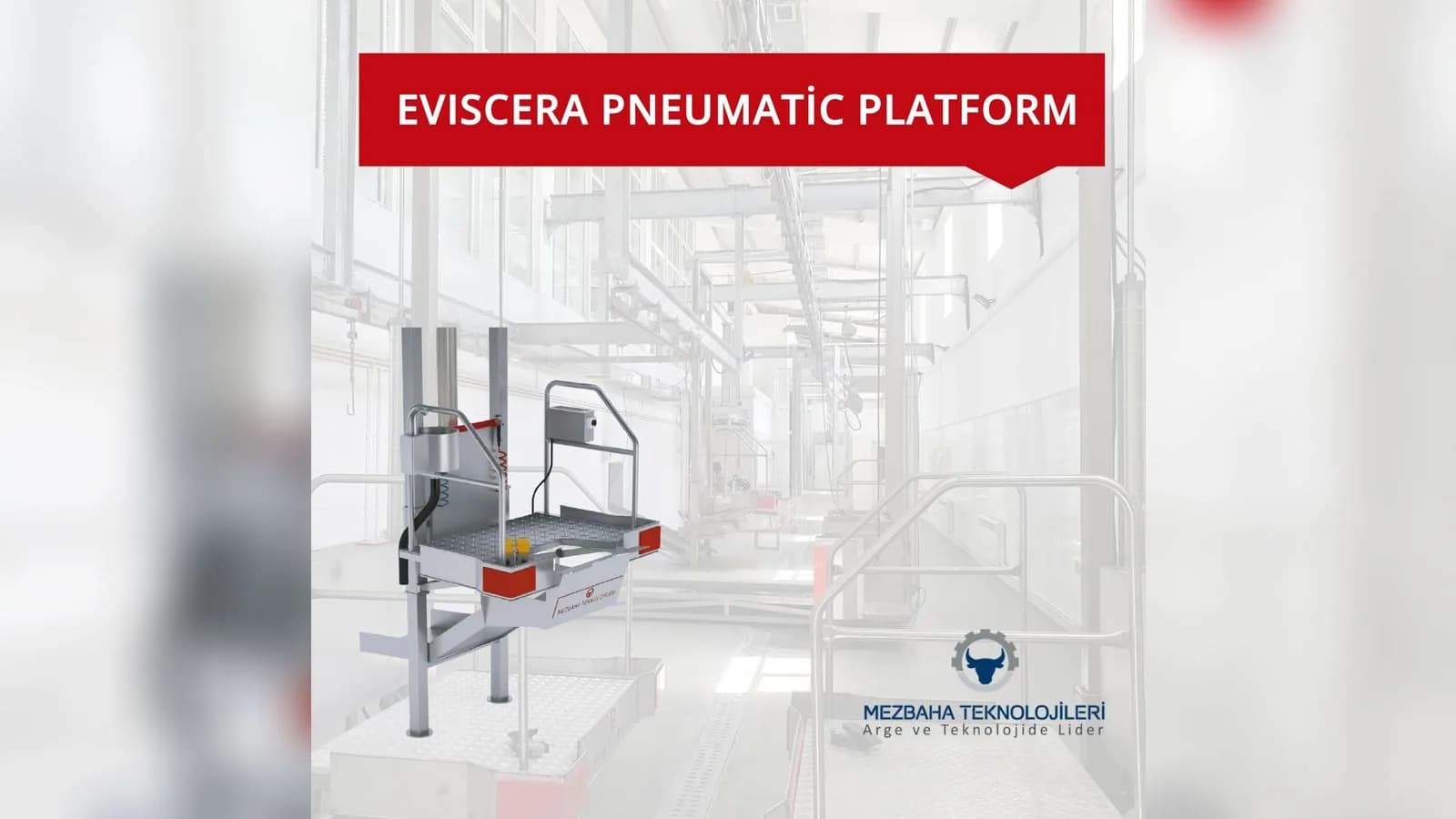
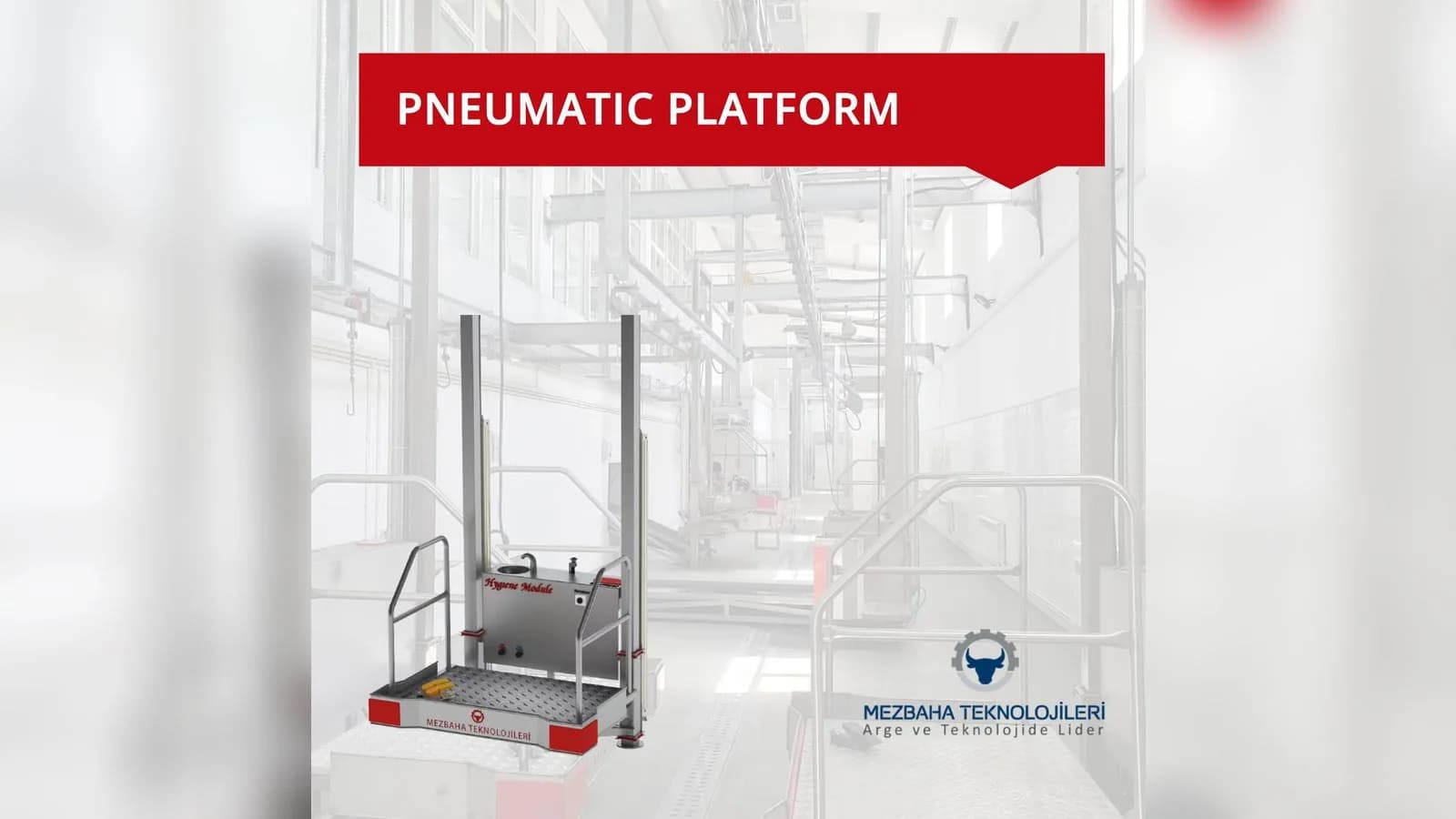
A pneumatic platform raises and lowers the work deck with compressed air. The listed Pneumatic Transferring Platform is designed so the working level can be adjusted to the animal's height and the butcher's operating position, and it is described as supporting a faster and more flexible workflow than fixed platforms in transfer operations.
Listed specifications
- Working height: 500–1,700 mm, foot-controlled movement
- Carrying capacity: at least 200 kg
- Platform size: 800 × 1,000 mm, according to operating conditions; covered with 3 mm aluminum sheet
- Drive: twin pneumatic cylinders with movement-speed control, lower and upper limit switches and a control panel
- Guiding: two polyamide skids positioned 1,000 mm apart
- Protection: air-inlet filter and air dryer for the cylinders; Ø 1-inch pipe parapet around the edge
- Frame: 100 × 100 × 4 mm box profile; complete stainless steel construction
How to choose
- Choose a fixed platform when a station always does the same task at one height and you want the fewest moving parts.
- Choose a pneumatic platform when animal sizes vary, several operators share the station or the task changes the working height.
- A line can combine both: fixed platforms where the height never changes and pneumatic platforms at transfer points.
Questions to ask a supplier
- What compressed-air supply (pressure and flow) does the pneumatic system need?
- How was the load capacity determined, and what safety margin applies?
- Can the hygiene module with a wash basin, as shown on the product render, be supplied for your configuration?
- Which spare parts (cylinder seals, skids, limit switches) should you keep in stock?
- Can drawings and a parts list be provided?
Frequently asked questions
What is the working height range?
500–1,700 mm on the listed model.
Is it foot-controlled?
Yes. It has a foot-controlled pneumatic movement and lowering system.
What is the load capacity?
The product page lists at least 200 kg.
Does it need compressed air?
Yes, the system is pneumatic. The product page does not give air-supply values; ask for them in writing with your quote.