Hydraulic Leg and Horn Cutter for Cattle Slaughter Lines: What to Check Before You Buy
A practical look at a hydraulic leg and horn cutter: listed specifications, how it is used at the transfer station and what to confirm with a supplier.
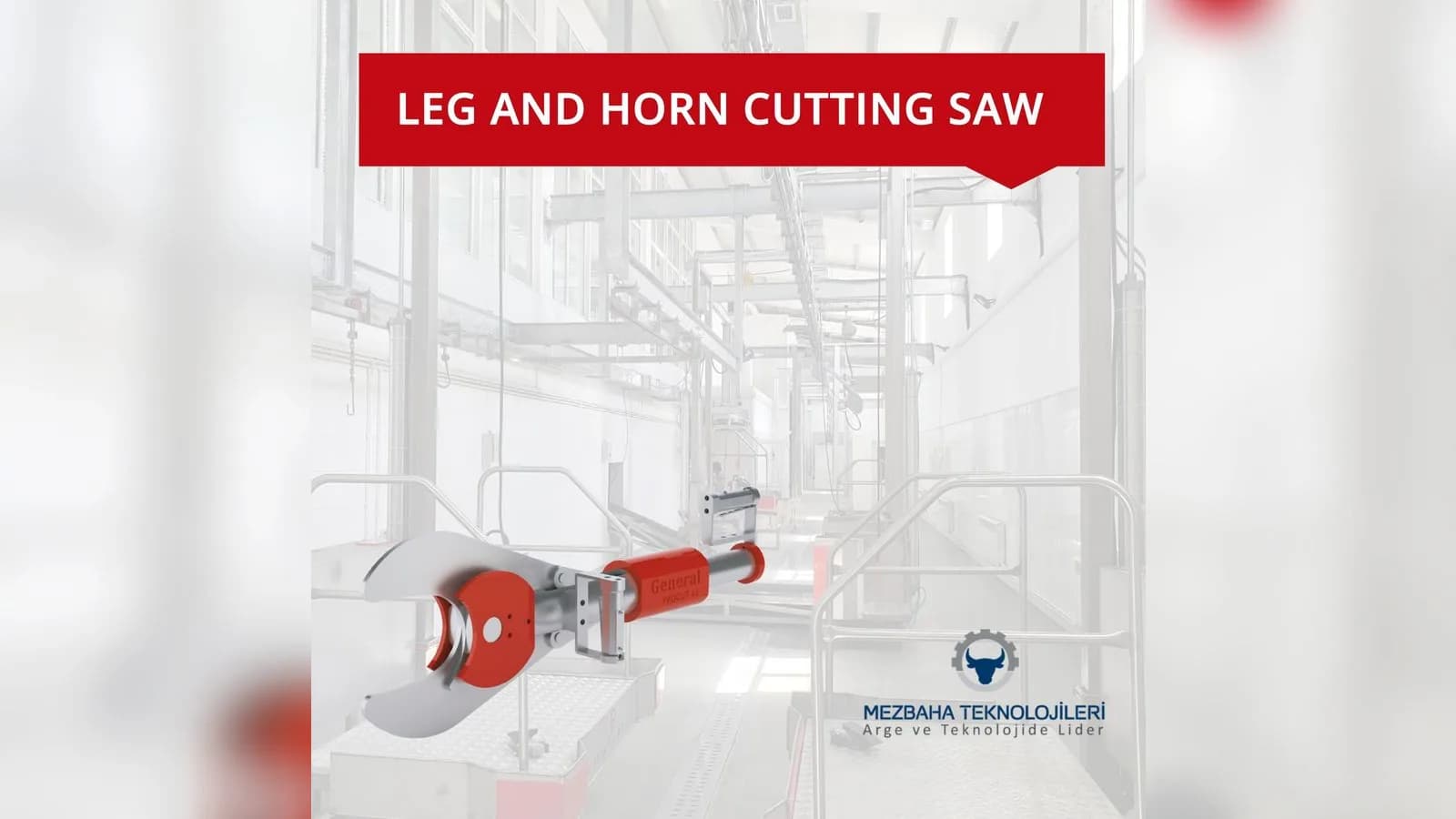
Cutting legs and horns is a routine step on a cattle slaughter line, and it is hard on tools. A hydraulic leg and horn cutter gives the operator a controlled cutting force without the strain of manual tools. Buyers also search for this tool as a leg and horn cutting saw; on the Mezbaha Teknolojileri product page it is listed as a hydraulic leg and horn cutter.
What does a leg and horn cutter do?
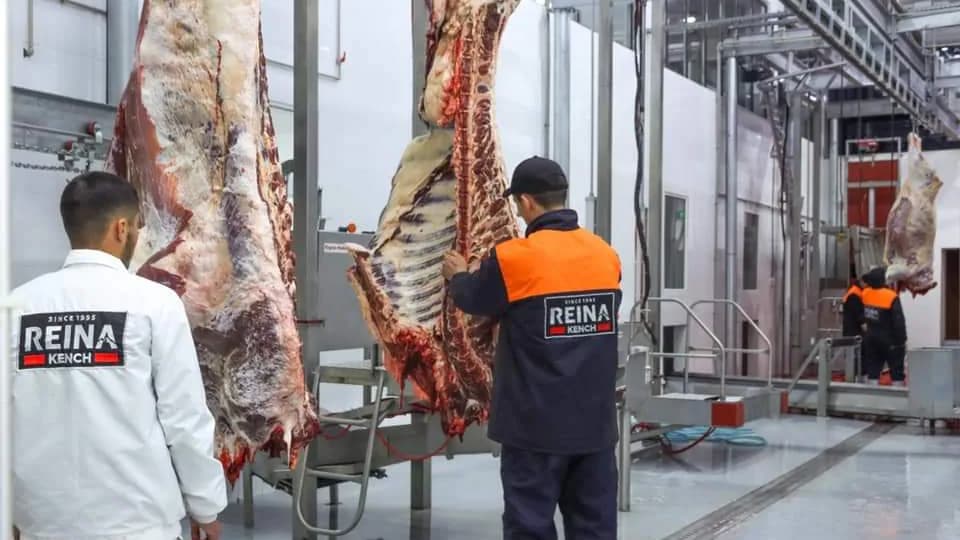
It cuts the fore and hind leg joints, cuts along bone lines and cuts horns on cattle of all sizes. It is generally used with balancer support at the transfer station: the balancer carries the machine's weight so the operator can position it accurately.
Listed specifications
These values are taken from the product page. Before you order, confirm that the power unit matches your facility's electrical supply (voltage, phase and frequency); the listed supply is 230 V, 3-phase, 60 Hz.
- Drive: hydraulic
- Cutting force: 44 kN
- Blade opening: 105 mm
- Machine length: 650 mm; machine weight: 28 kg
- Body: stainless steel, with hardened, corrosion-resistant cutting edges
- Hydraulic power unit: 3 kW motor, 230 V, 3-phase, 60 Hz
- Hose length: 5 m; oil capacity: 56 L
Why hydraulic?
A hydraulic cutter delivers a steady cutting force at the blade and keeps the working head compact. The part the operator handles is the 650 mm, 28 kg head; the pump, motor and oil sit in a separate power unit connected by a 5 m hose.
Hygiene and maintenance
The listed model has a stainless steel body and hardened, corrosion-resistant blades, which are intended to hold up in wash-down conditions and to help reduce blade maintenance. Plan regular checks of hoses, fittings and oil level, and keep a spare blade set if downtime would stop the line.
Checklist before you request a quote
- Which cuts do you need (fore leg, hind leg, horns) and on what animal sizes?
- Do you already have a balancer or transfer-station rail at a suitable height?
- Does the power unit match your electrical supply (voltage, phase, frequency)?
- Where will the power unit sit, and how far is it from the cutting point (the hose is 5 m)?
- Which spares do you need: blades, hoses, seals?
- Do you want the hydraulic oil type and filling instructions in writing?
Frequently asked questions
Is it a saw or a cutter?
The listed machine cuts hydraulically with a 105 mm blade opening. The product page names it a leg and horn cutter; some buyers call it a leg and horn cutting saw.
What cutting force does it have?
44 kN.
Can it cut horns on large cattle?
The product page states that the design suits cattle of all sizes and covers horn cutting. Confirm the largest horn size you need with the supplier.
Does it need a balancer?
It is generally used with balancer support at the transfer station. Whether you need one depends on your layout; ask for advice with your quote request.